Should landlords install battery swapping stations for electric motorcycles or charging stations? A comparison of mechanisms, costs, and suitability for different types of premises - with a detailed comparison table.
Charging or battery swapping: what's the difference, and why is this question important for landlords
Most online content about "electric motorcycle battery swapping stations" is written for end-users - ride-hailing drivers, delivery personnel who need to quickly swap batteries to continue driving - or from the perspective of a specific company's ecosystem. Very few articles answer the question that landlords (apartment buildings, hotels, street-front properties, parking lots) are considering: whether to invest in or cooperate to install charging infrastructure, and whether to choose charging stations or battery swapping stations.
The core difference lies in how vehicles "recharge". Charging stations keep the battery attached to the vehicle, plug in the power and wait for the battery to fill up - taking from a few dozen minutes to several hours depending on the power capacity. Battery swapping stations, on the other hand, involve removing the depleted battery from the vehicle, replacing it with a fully charged one from the station, and completing the process in about 2 minutes - but only if the vehicle's battery is compatible with the station's battery standard. The two models serve different user behaviors, and each type of premise is usually only suitable for one of the two - rarely suitable for both.
Electric Motorcycle Charging Station: mechanism, advantages, and disadvantages
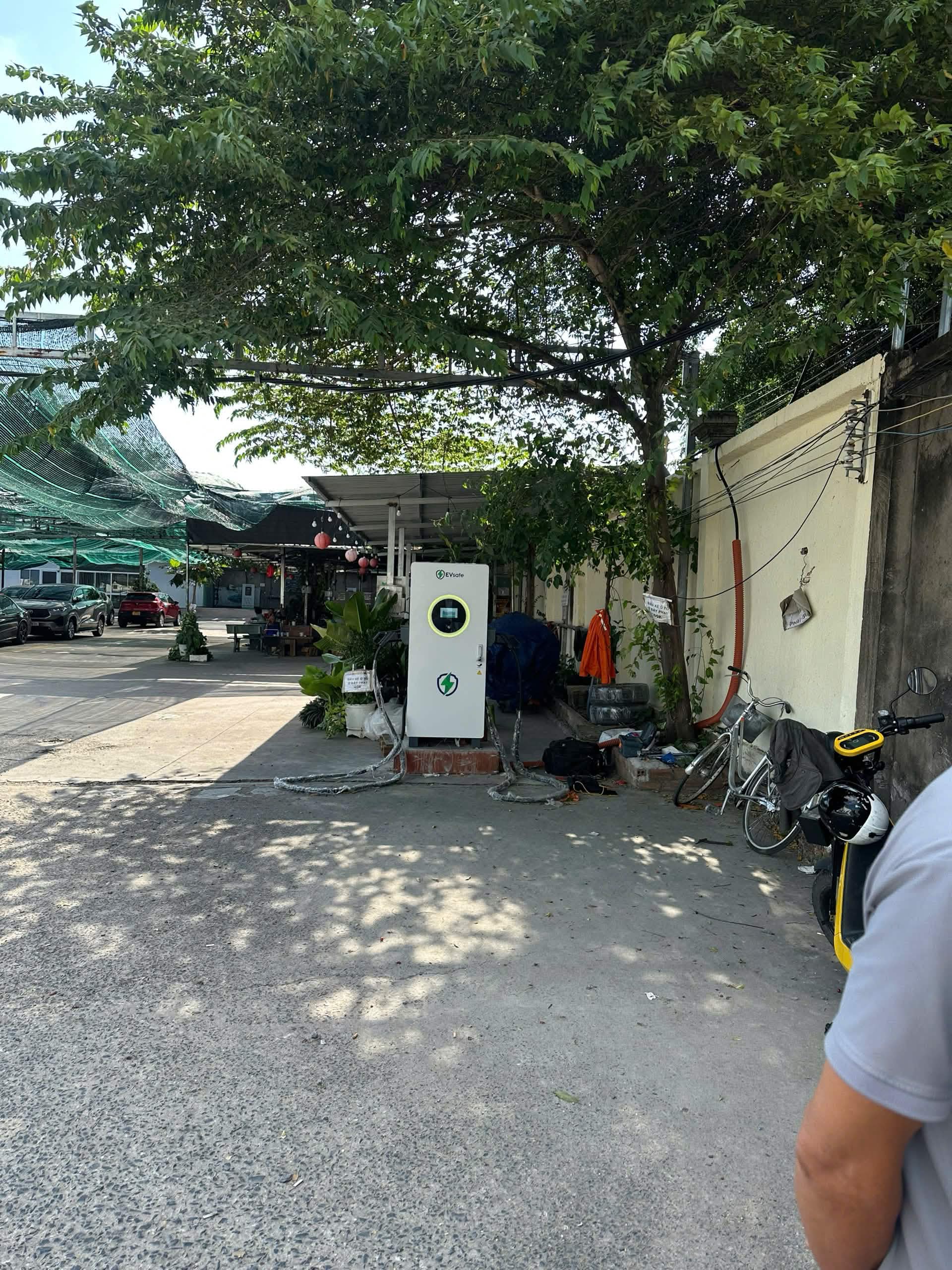
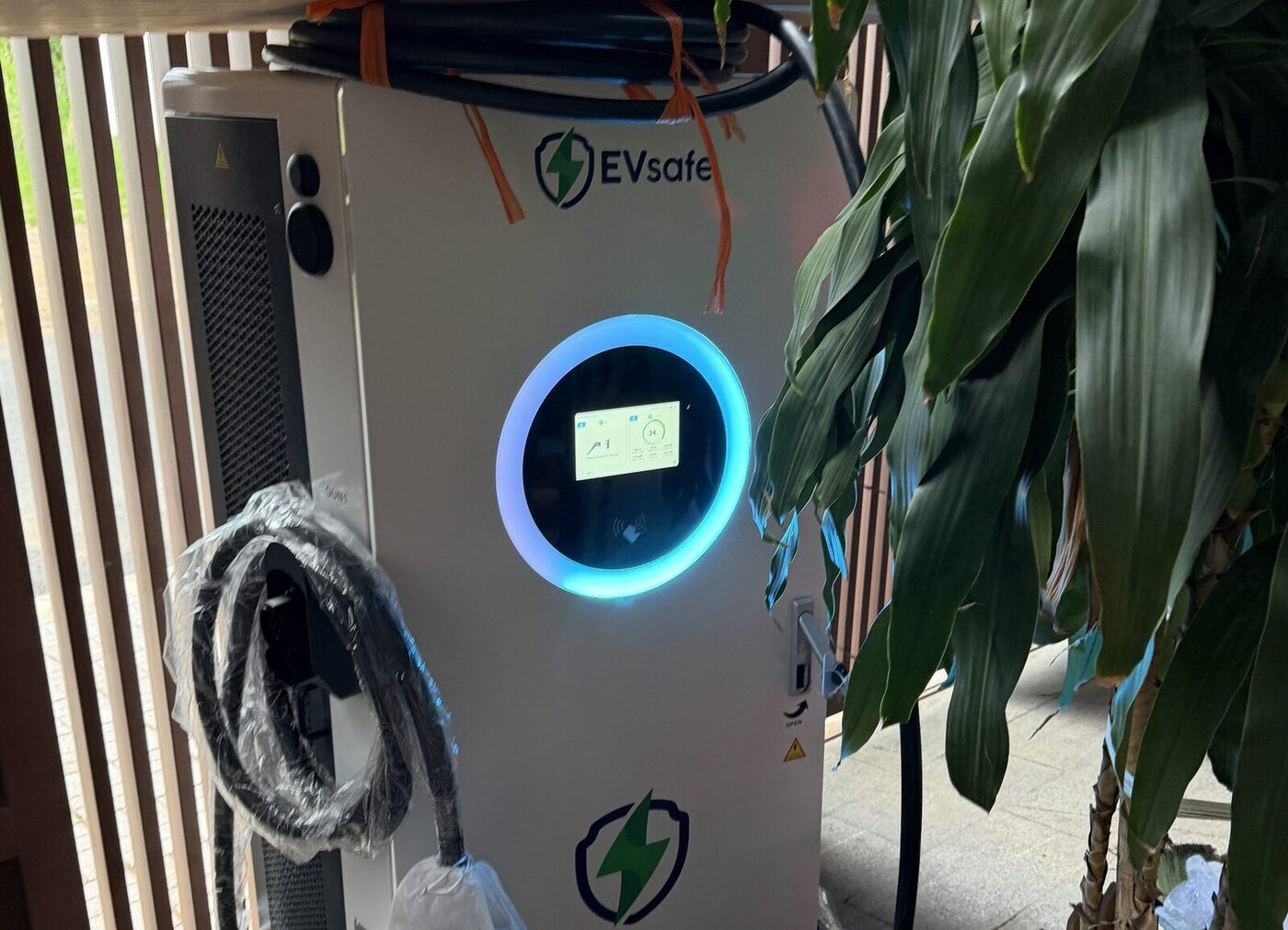
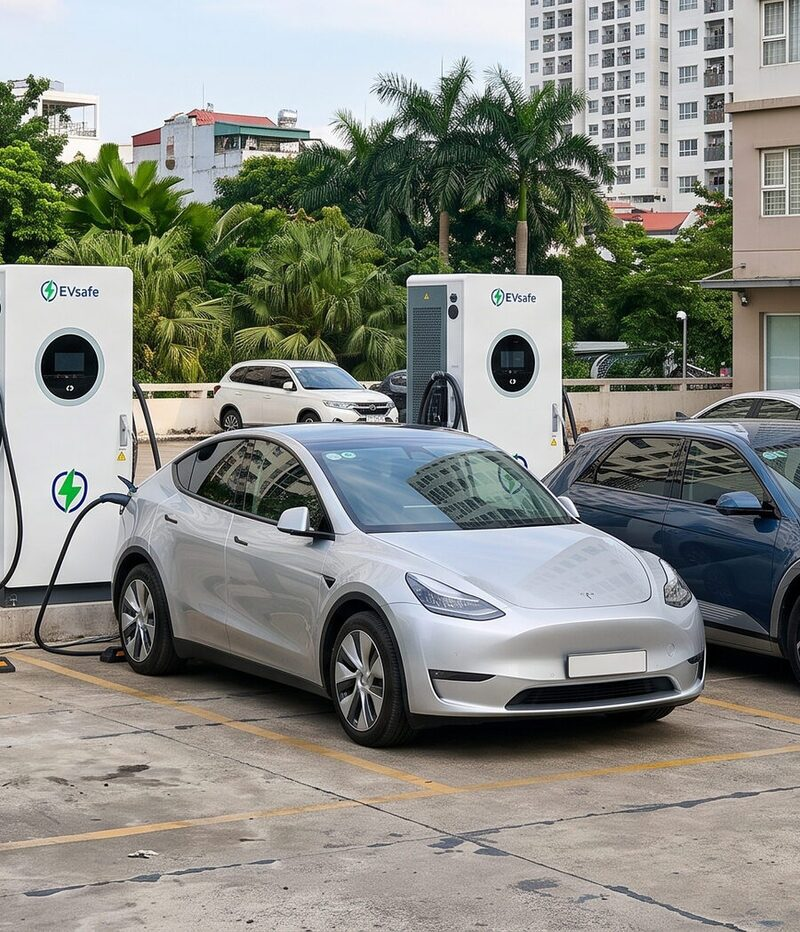
The charging station operates on a simple mechanism: customers plug the AC charging port into the vehicle (using the vehicle's charging head, without needing to swap batteries), scan the QR code or open the app to activate, and the vehicle's battery is gradually charged on the spot. EVsafe implements this type of station with load monitoring, automatic disconnection in case of overheating or overcurrent, and integration with the building's fire alarm system - details at Electric Vehicle Charging Station.
Advantages:
- The highest universality - almost all electric vehicles currently in circulation in Vietnam have their own charging port, regardless of the manufacturer or battery standard.
- The investment cost per charging port is much lower than that of a battery swap station, and it is easy to expand gradually according to the actual number of vehicles.
- No need for customers to "own" compatible batteries in advance - anyone can use it as long as their vehicle has a charging port.
Disadvantages:
- Long charging time (usually several hours with civilian AC charging), so it is only suitable for places where customers leave their vehicles for a long time - overnight or during working hours.
- Occupies parking space throughout the charging time, not suitable for areas with high vehicle traffic and requiring quick parking turnover.
Electric Vehicle Battery Swap Station: Mechanism, Advantages, and Disadvantages
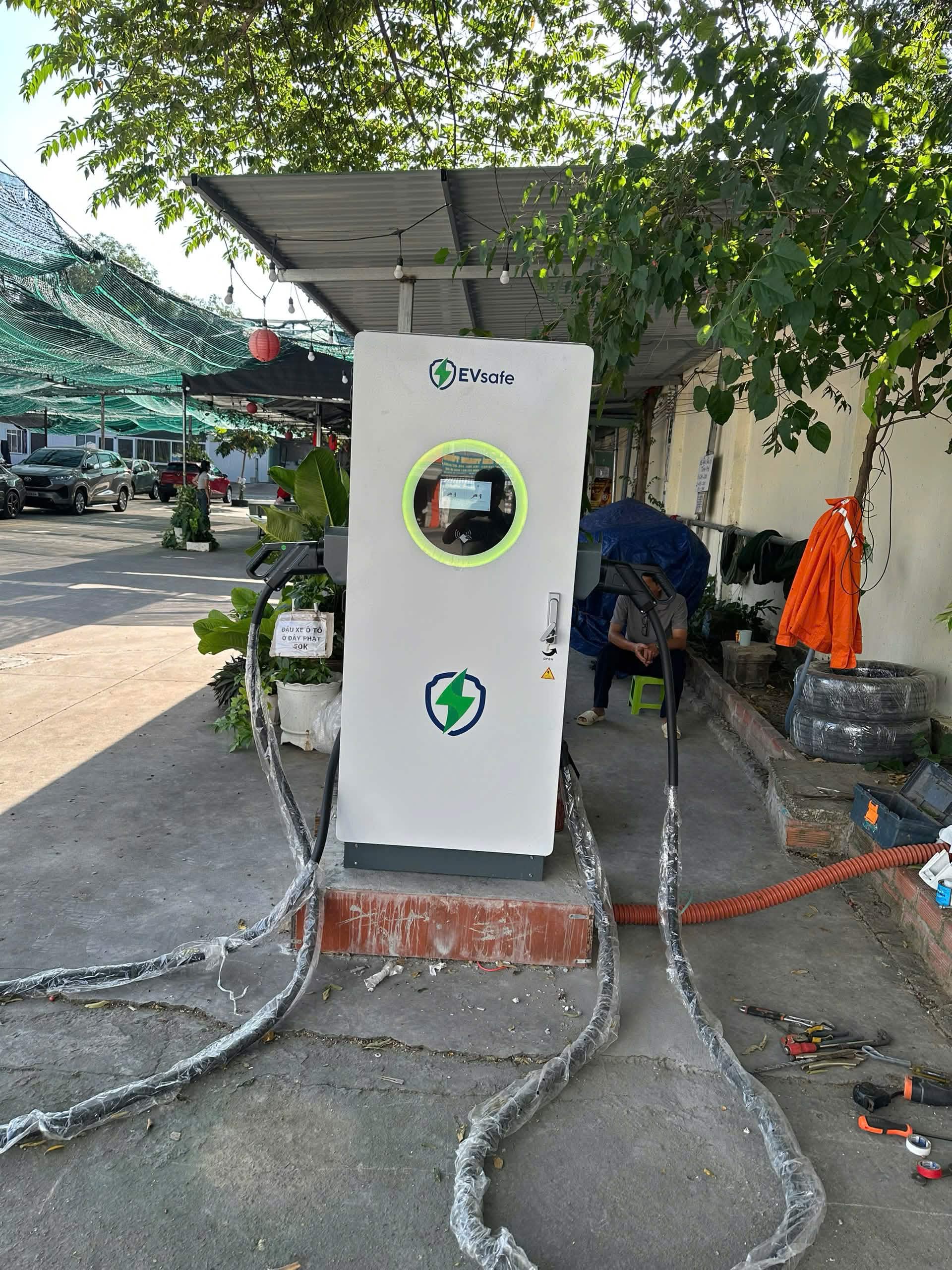
The battery swap station operates like an automatic battery cabinet: customers remove the depleted battery from their vehicle, insert it into an empty compartment, the system confirms and returns a fully charged battery from another compartment. The entire process usually takes less than 2 minutes, regardless of weather or the condition of the old battery, as customers always receive a pre-checked battery. Refer to the operating model at electric vehicle battery swap station page.
Advantages:
- Nearly instantaneous speed - suitable for customers who do not have time to wait, especially for service vehicles (delivery, ride-hailing).
- Optimized for areas with high vehicle traffic, as each swap only takes a few minutes instead of several hours of parking space.
- No need for customers to leave their vehicles overnight or wait on site, reducing the pressure on parking space.
Disadvantages:
- Heavily dependent on battery standards - only serves vehicles that use the correct type of battery compatible with the swap cabinet, not as universal as charging stations.
- The initial investment cost (battery swap cabinets, backup battery warehouses, charging systems for inventory batteries) is often higher than that of an equivalent charging station.
- A sufficiently large density of compatible vehicles within the service radius is needed to achieve a regular swap frequency - if there are few compatible vehicles, the battery swap cabinet is likely to fall into a state of being invested in but with few users.

Quick comparison table: charging station vs battery swap station
- Time per turn · Charging station: Several minutes to several hours · Battery swap station: ~2 minutes (estimated reference)
- Initial investment cost · Charging station: Lower, easy to expand by port · Battery swap station: Higher, including backup battery warehouse
- Suitable location · Charging station: Places where customers park their vehicles for a long time: apartments, dormitories, offices · Battery swap station: High-traffic areas, customers do not wait: delivery points, transportation routes
- Vehicle compatibility · Charging station: Most vehicles with a charging port - high popularity · Battery swap station: Only vehicles using the correct battery standard of the station
- Operation · Charging station: Monitoring electricity load, fire safety · Battery swap station: Monitoring battery inventory, background charging, battery rotation
- Parking space · Charging station: Occupies space throughout the charging time · Battery swap station: Almost no occupation of parking space
Choose by location type: should you install a charging station or a battery swap station?
For most residential areas in Vietnam currently - apartments, dormitories, mini apartments - charging stations are still a more reasonable choice. The simple reason is: customers in these places park their vehicles overnight, which means they already have the "waiting time" that charging stations need, while the problem of battery compatibility of battery swap stations becomes an obstacle - residents use many different vehicle brands, not everyone has batteries compatible with a single standard battery swap cabinet.
Battery swap stations are more worth considering at locations with high vehicle traffic and customers who don't have time to wait - for example, stops on delivery routes, vehicle gathering points, or areas with a high density of vehicles with compatible battery standards to ensure the frequency of using the swap cabinets. If your location does not fall into the high-traffic category and you have not yet determined the percentage of compatible vehicles, charging stations are still a safer option in terms of capital.
In reality, the boundaries are not always clear - a mixed-use location (with both residents parking overnight and a number of transient customers) may need to consider combining both options, or starting with a charging station and then expanding after measuring actual demand.
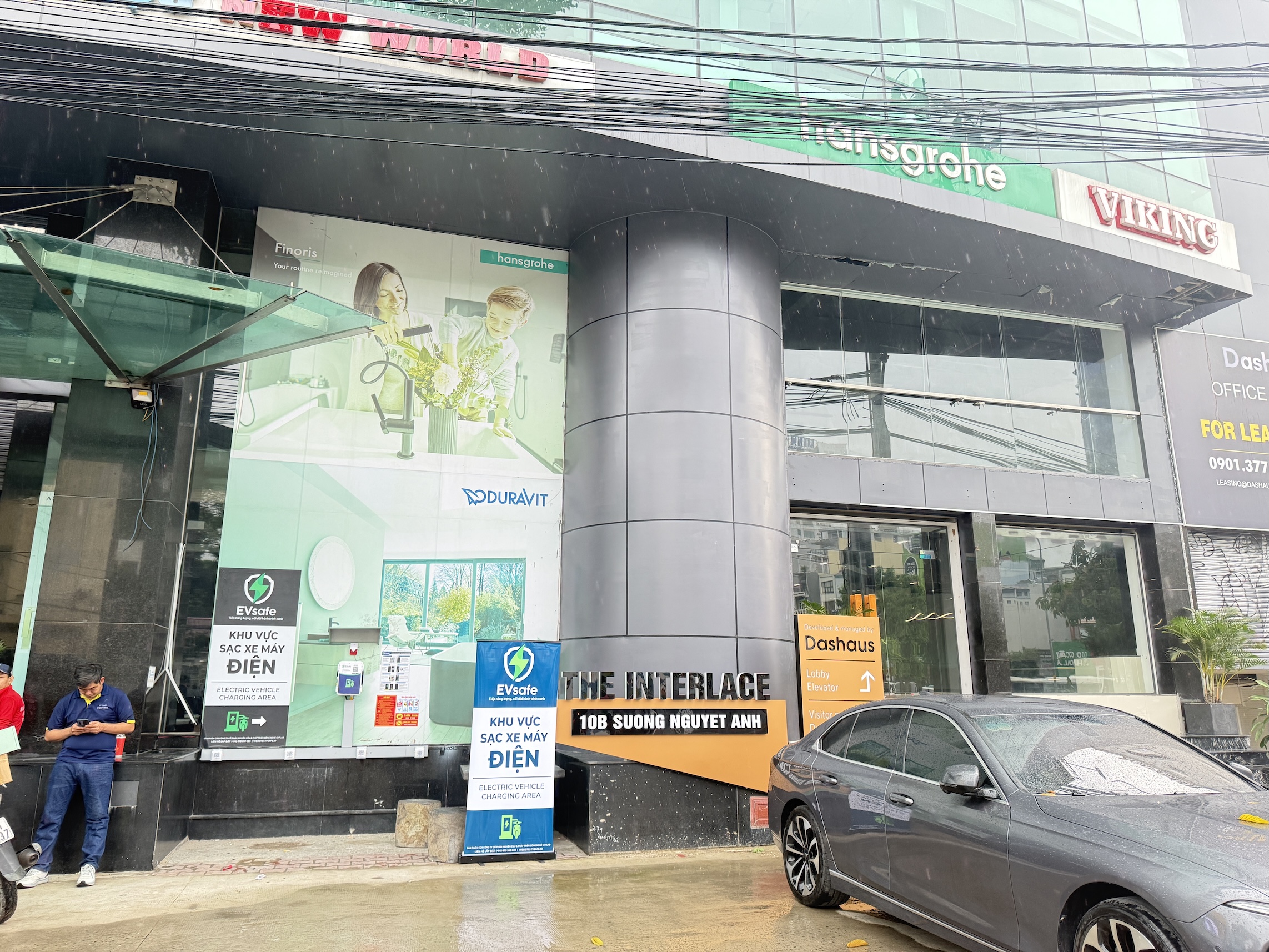
EVsafe consults on both models - without pushing one direction
EVsafe provides both charging station and battery swap station solutions for location owners, so there is no motivation to "sell" a single model regardless of whether the location is suitable or not. The practical process always starts with a survey: counting the number of electric vehicles that regularly reside or visit the area, determining the percentage of vehicles compatible with each battery standard (if considering battery swapping), and measuring the time customers typically leave their vehicles on site. This survey data decides the approach - not intuition or market trends.
See an overview of the charging station and battery swap station solution packages according to needs at the EVsafe solutions page.
A cooperative model - no need to invest capital if you're not ready yet
With both charging stations and battery swap stations, property owners have two cooperation options with EVsafe: self-investing in equipment and receiving 90% of revenue (EVsafe retains 10% for operation/maintenance), or having EVsafe invest the entire amount with 0 dong and the property owner receiving 40% of passive revenue (EVsafe retains 60%). Revenue reconciliation is carried out periodically on the 15th and 30th of each month, transparently based on actual operational data - not estimated figures.
If you have a property and are unsure whether to choose charging or battery swapping, the first step is not to make an immediate decision, but to let EVsafe conduct a free survey - and then provide recommendations based on the actual data of that property.
Register for a site survey and become an EVsafe partner →