What is an electric vehicle charging station franchise, and how is it different from a cooperation for installation? Compare EVsafe's revenue-sharing model (90/10, 60/40) with V-GREEN's - only publicly available facts.
What is an electric vehicle charging station franchise, and how is it different from a cooperation for installation?
"Electric vehicle charging station franchise" in the common understanding is a model where one party (the brand owner) allows another party (the franchisee) to use their brand, operating procedures, and technical standards to open a charging point, usually with an initial franchise fee and the obligation to strictly adhere to the brand's standards - similar to the franchise model of coffee shops or convenience stores. This is how many people who search for this term imagine it, but in reality, most electric vehicle charging station cooperation opportunities in Vietnam currently are not franchise agreements in the classical sense, but rather operation cooperation and revenue sharing - the property owner does not need to buy a franchise, does not need to learn how to operate the electrical infrastructure themselves, just needs to provide the space and sign a revenue-sharing contract with the operating unit.
The core difference lies in who bears the capital risk and who operates the technology. Traditional franchising requires the franchisee to self-invest, self-operate according to the brand's standards, and self-bear business risks - the franchisor only collects franchise/royalty fees. In contrast, the EVsafe-style electric vehicle charging station partnership is the opposite: the operating unit (EVsafe) can be the one investing 100% in equipment, taking responsibility for construction, 24/7 IoT monitoring, and maintenance, while the landowner only needs to contribute land and receive a share of revenue according to the agreed-upon ratio - no franchise fees, no brand binding at the store level.
Overview of the electric vehicle charging station market in Vietnam
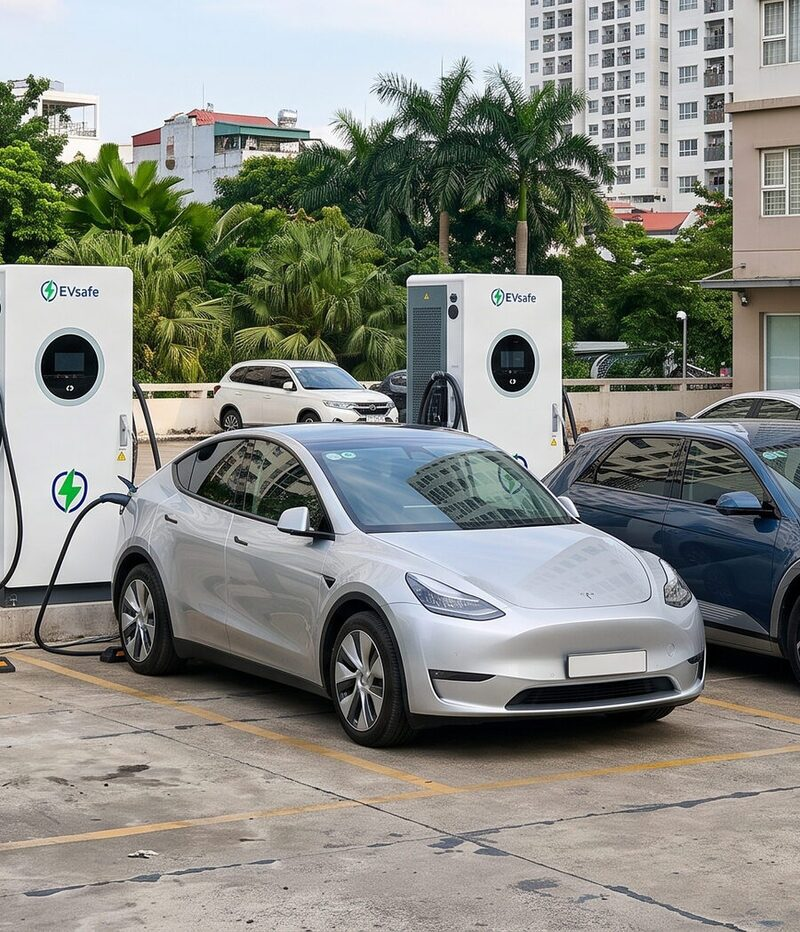
Most media coverage of "charging station franchising" in Vietnam is currently associated with the V-GREEN/GSM and VinFast ecosystem - focusing on electric car charging stations, expanding through a large partner network (real estate, gas stations, commercial parking lots) with much larger investment scales and land areas than the needs of a single apartment building or motel. This is the market segment with the highest media coverage when searching for terms related to charging stations and franchising.
At the same time, the demand for electric vehicle charging at small and medium-sized facilities - apartments, boarding houses/minihotels, F&B shops, household businesses - is still a clear market gap. This group of facility owners often does not have the budget or need to participate in a large-scale franchise program like car stations, and also lacks the technical expertise to operate electric vehicle charging infrastructure (electrical connections, fire prevention, revenue reconciliation). This is the segment that B2B units specializing in electric vehicles like EVsafe serve: a comprehensive solution for facility owners, on a smaller scale, without requiring large capital, and no need for operating expertise.
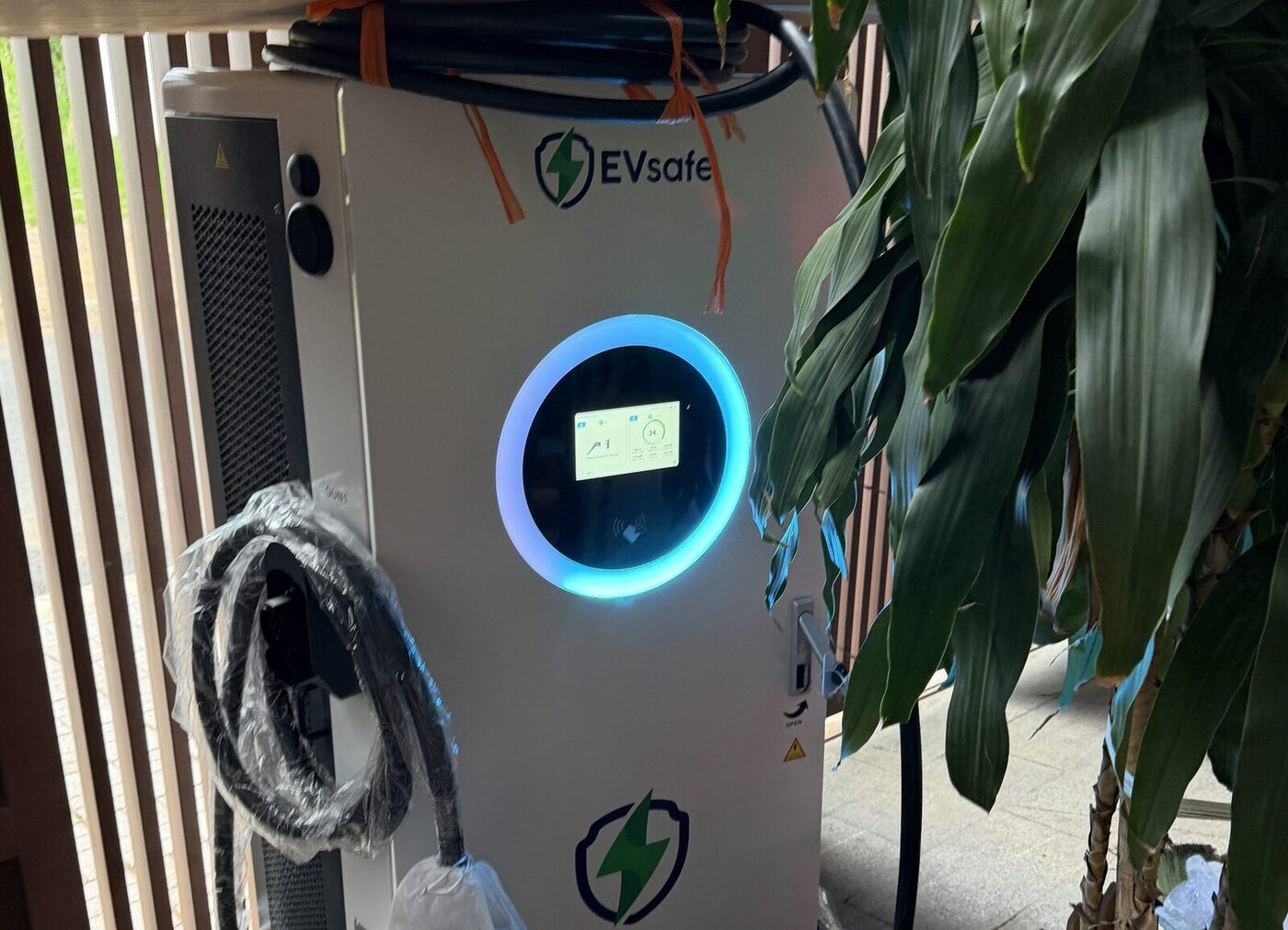
In terms of practical operation, EVsafe is currently deploying a network of around 40 charging stations in Hanoi, TP.HCM, and Danang, mainly serving apartments, boarding houses, and F&B facilities. The difference from the decentralized agency/franchise model is that EVsafe directly operates the entire network - without handing it over to a third party for technical management - accompanied by 24/7 IoT monitoring and EVShield fire insurance (in cooperation with OPES) for each station. This centralized operation is the reason EVsafe can commit to SLA troubleshooting and fixed reconciliation schedules instead of leaving each partner to take technical responsibility like in some decentralized agency models.
How does EVsafe's charging station cooperation model work - 90/10 and 60/40?
EVsafe applies two revenue-sharing mechanisms, depending on whether the facility owner wants to invest in equipment themselves. Both are reconciled and paid according to a fixed schedule - on the 15th and 30th of each month - based on the actual amount of electricity measured through the IoT system, without estimation.
Model 1 - Facility owner invests in equipment themselves (90/10). The landlord invests in purchasing charging stations and connection infrastructure, while EVsafe provides the operating platform, IoT monitoring, and technical maintenance. The landlord retains 90% revenue, and EVsafe collects 10% in the form of platform, operating, and maintenance fees. This model is suitable for landlords who have available capital, want to maximize long-term revenue, and are willing to accept initial capital risks in exchange for a more favorable revenue-sharing ratio.
Model 2 - EVsafe invests 100% in equipment (60/40). EVsafe invests in all equipment, construction, and operation, and the landlord does not need to spend a single dong. In return, EVsafe retains 60% revenue to recover equipment investment capital, and the landlord receives 40% in the form of passive income. This model is suitable for landlords who do not have experience operating electric infrastructure, want to generate additional income from unused space (parking garages, yards, facades) without worrying about capital, fire safety, or reconciliation.
The 10% that EVsafe collects in the 90/10 model is not just a management fee - it consists of three specific parts: software platform costs (QR payment app, kWh measurement system), remote operation costs (24/7 IoT monitoring, fault alerts), and maintenance costs (periodic and urgent maintenance when equipment is worn out). Therefore, landlords in the 90/10 model still enjoy full operating services like in the 60/40 model, but they have already invested their own capital, so they do not have to share most of the revenue for the operator to recover CAPEX. The specific payback period for each type of premises depends on the actual charging density and requires a separate survey - the timeframes mentioned in the article are only estimates and not commitments.
- Who invests in equipment · Model 90/10 (landlord self-invests): The landlord · 60/40 model (EVsafe invests 0đ): EVsafe
- Revenue share rate for the premises owner · 90/10 model (owner self-invests): 90% · 60/40 model (EVsafe invests 0đ): 40%
- Revenue share rate for EVsafe · 90/10 model (owner self-invests): 10% (platform fee, operation, maintenance) · 60/40 model (EVsafe invests 0đ): 60% (equipment capital recovery + operation)
- Initial capital risk · 90/10 model (owner self-invests): Owner bears · 60/40 model (EVsafe invests 0đ): EVsafe bears
- Suitable for · 90/10 model (owner self-invests): Premises owners with available capital, wanting to optimize long-term revenue · 60/40 model (EVsafe invests 0đ): Premises owners without capital/experience, wanting passive income
- Settlement schedule · 90/10 model (owner self-invests): 15th and 30th of each month, based on actual kWh measured via IoT · 60/40 model (EVsafe invests 0đ): 15th and 30th of each month, based on actual kWh measured via IoT
Both models eliminate the most common bottleneck when premises owners self-operate charging stations: non-transparent settlement. Since revenue is calculated based on kWh measured via IoT instead of manual estimation, both parties have an independent basis to verify the data, minimizing disputes. See detailed cost components and revenue sharing ratio calculation at EVsafe's cost and consulting page.
Comparing EVsafe's partnership model with V-GREEN-style charging station franchising
Many landowners looking for "electric vehicle charging station franchises" are actually comparing them to what they've heard about V-GREEN/GSM - the brand with the highest recognition in the charging station industry in Vietnam. To avoid confusion, the table below compares the two models based on publicly available information from each party - without evaluating which one is better, as the two models serve different objects and types of vehicles, and do not compete directly in the same segment of land.
- Main vehicle type · V-GREEN/GSM-style franchise: Electric cars (VinFast ecosystem) · EVsafe charging station partnership: Electric motorcycles (with electric cars, and battery swapping as needed)
- Landlord type · V-GREEN/GSM-style franchise: Large partners: real estate, gas stations, commercial parking lots · EVsafe charging station partnership: Medium and small landlords: apartments, hotels/CCMN, F&B, household businesses
- Who invests in equipment · V-GREEN/GSM-style franchise: According to the franchise framework of the brand owner · EVsafe charging station partnership: Flexible: landlord (90/10) or EVsafe (60/40)
- Who operates technically · V-GREEN/GSM-style franchise: According to the operation model of the V-GREEN/GSM ecosystem · EVsafe charging station partnership: EVsafe operates directly, with 24/7 IoT monitoring
- Main risk · V-GREEN/GSM-style franchise: According to the contract commitment and brand binding · EVsafe charging station partnership: Capital risk is clearly transferred according to the chosen model (90/10 or 60/40)
- Insurance/safety · V-GREEN/GSM-style franchise: According to the internal standards of the V-GREEN/GSM ecosystem · EVsafe charging station partnership: EVShield fire and explosion insurance (in cooperation with OPES), with IoT monitoring linked to fire prevention and fighting
The biggest difference does not lie in "which one is better" but in the scale of service and target vehicle type. V-GREEN/GSM solves the problem of large-scale electric vehicle charging infrastructure in the VinFast ecosystem. EVsafe solves a different problem: small and medium-sized landowners who want to have electric motorcycle charging stations without having to invest, learn to operate, or take responsibility for fire prevention - a very specific B2B need that large-scale franchising programs often do not design specifically for.
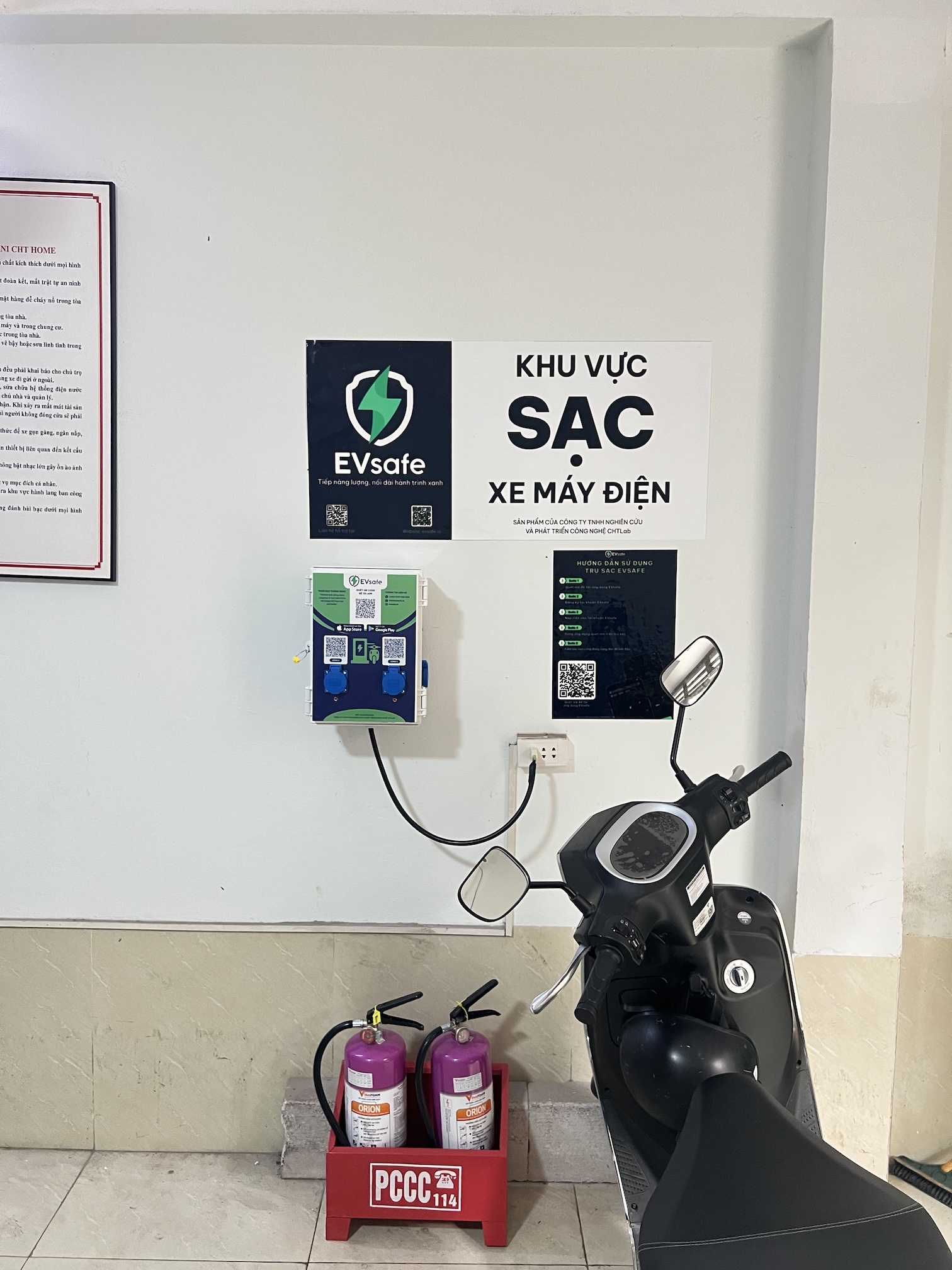
Who should choose to cooperate with EVsafe to install electric motorcycle charging stations?
- Apartment building management/owners with parking basements or yards that have empty spaces, where residents are increasingly using electric motorcycles but do not have safe and interconnected fire prevention charging infrastructure.
- Owners of boarding houses, mini apartments (CCMN) who want to increase the rental value with charging services, while tenants mostly do not have their own charging spaces at home.
- Owners of F&B establishments, cafes who want to increase the time customers stay (time-on-site) with charging services, considering this as a customer retention utility rather than a primary source of income.
- Household businesses with street-front properties who want to utilize unprofitable spaces without having to change the main function of their stores.
The common point of all four groups: having available land, having real demand from electric motorcycle users around, but not wanting (or not having the resources) to operate electric infrastructure themselves. For the apartment group in particular, EVsafe has a solution for electric motorcycle charging stations in apartments specially designed for high-density, fire prevention safety, and transparent reconciliation between building management and residents.
The process of starting cooperation with EVsafe to install charging stations
- Conducting site surveys and electrical load assessments. The EVsafe technical team conducts a direct survey of the area, existing electrical system, load sharing capacity, and actual density of electric motorcycles in the area to assess feasibility - this step is free and does not obligate the landowner to sign a contract immediately.
- Propose a suitable cooperation model. Based on the survey results and the landowner's financial capabilities, EVsafe proposes a 90/10 (self-investment) or 60/40 (EVsafe invests 0đ) cooperation model, including the expected number of charging ports, costs (if self-investing), and return on investment period (estimated for reference, depending on actual usage density) for the landowner to consider before making a decision.
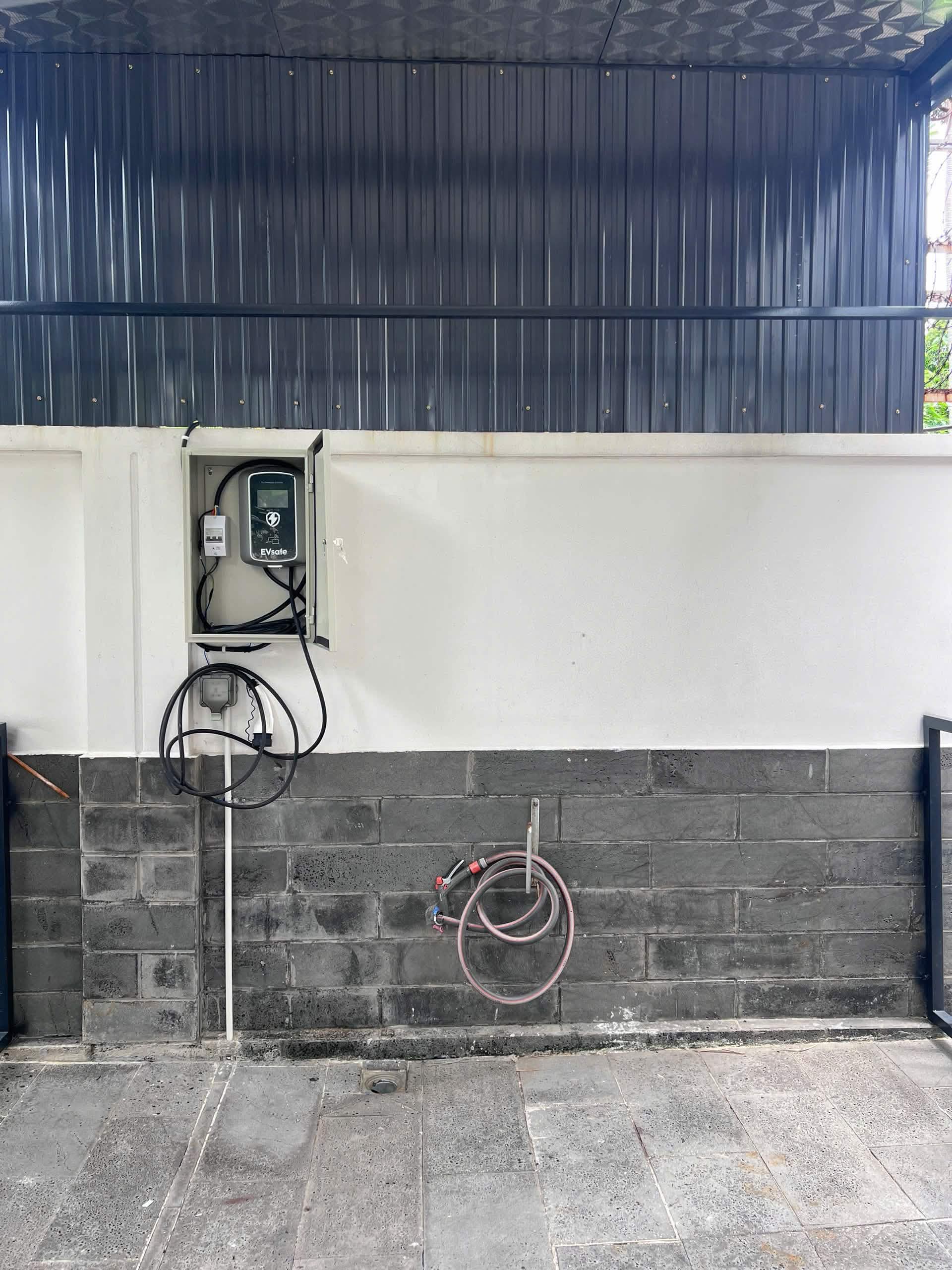
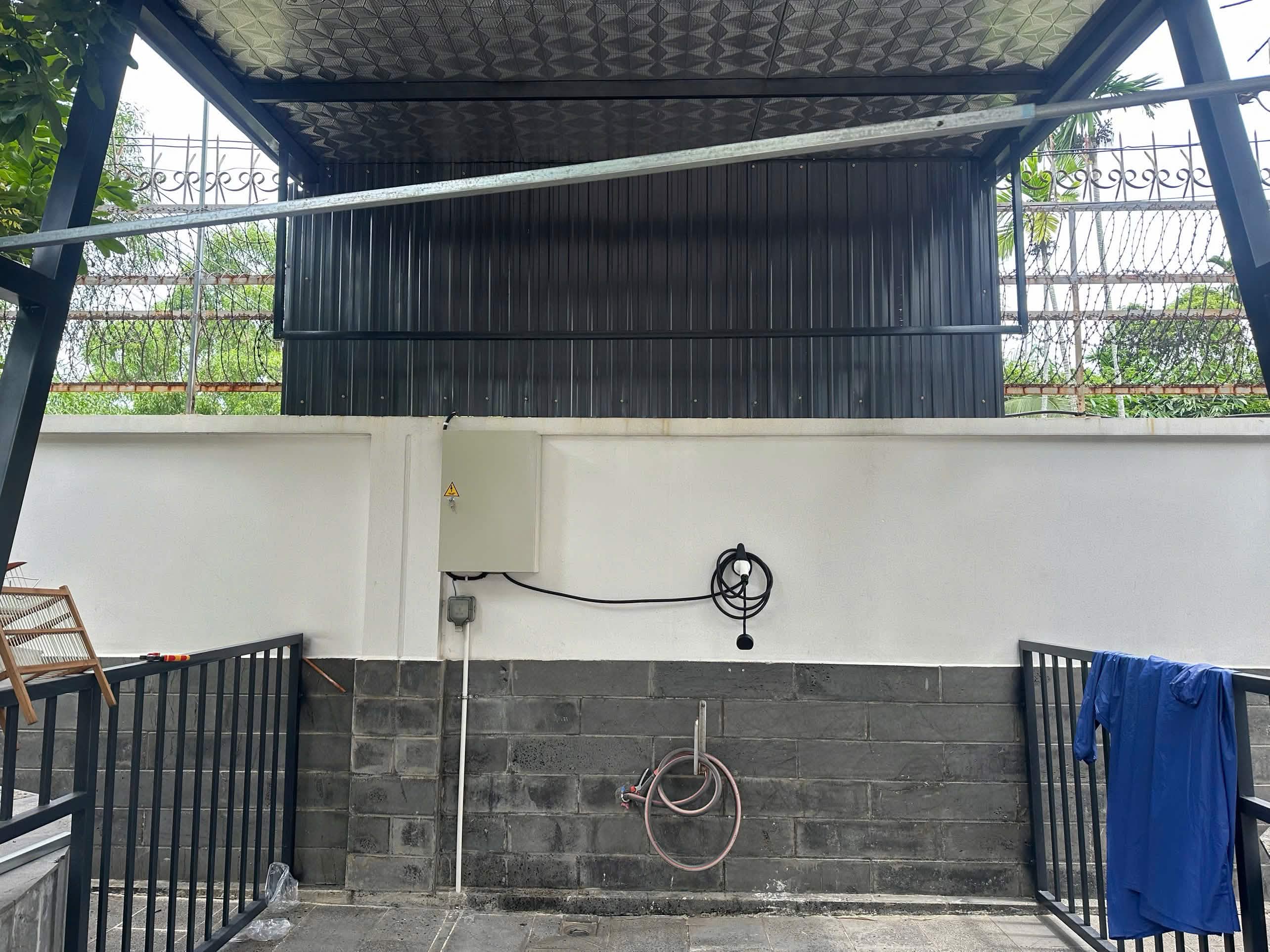
- Construction and installation. After agreeing on the cooperation model and signing a contract, EVsafe deploys the central electrical cabinet, charging station, automatic protection system (overheating, overloading, leakage current), and integrates with the building's existing fire alarm system, ensuring full technical acceptance before putting it into operation.
- Operation and settlement. The station operates under 24/7 IoT monitoring, customers pay via QR code/App without needing an attendant to collect money, revenue is transparently settled and transferred on a fixed date of 15th and 30th every month based on actual kWh measured - the landowner can check the data themselves on the app instead of relying on one-sided reports.
The entire process above is included in EVsafe's comprehensive charging station solution - the landowner does not need to find equipment suppliers, handle fire prevention procedures, or establish a settlement process themselves.
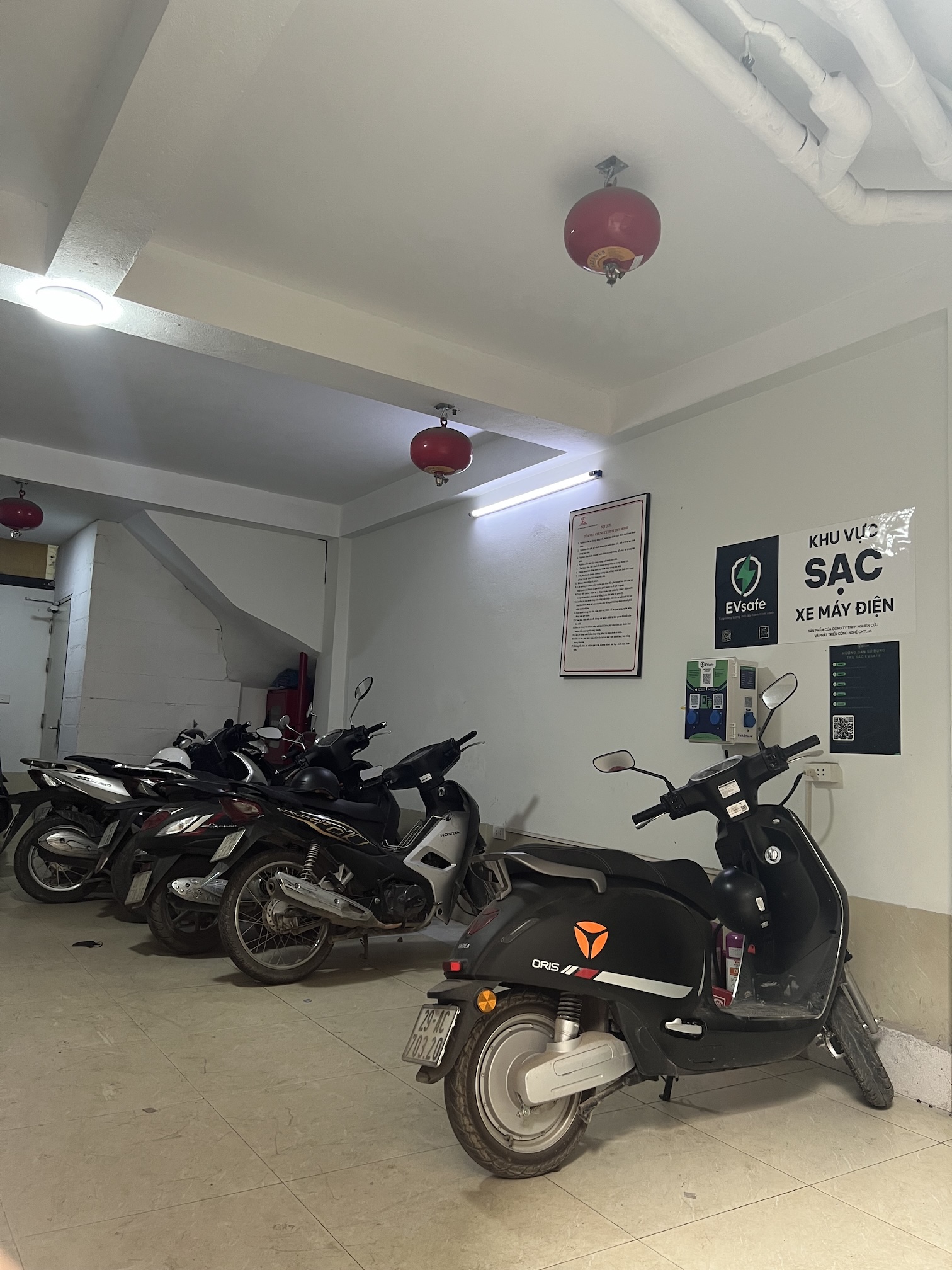
In conclusion
The most accurate meaning of "electric vehicle charging station franchise" in the current Vietnamese context is cooperative operation and revenue sharing - not a franchise model that charges brand fees like the F&B or retail industries. EVsafe offers two flexible mechanisms (90/10 or 60/40) for venue owners to choose from based on their financial capabilities, focusing solely on electric motorcycles - a segment that large-scale charging station franchise programs often do not directly serve.
If you have an empty venue and want to know which model is suitable - investing yourself to keep 90% of the revenue, or having EVsafe invest 0 đồng and receiving 40% passively - the first step is to register for a free venue survey.