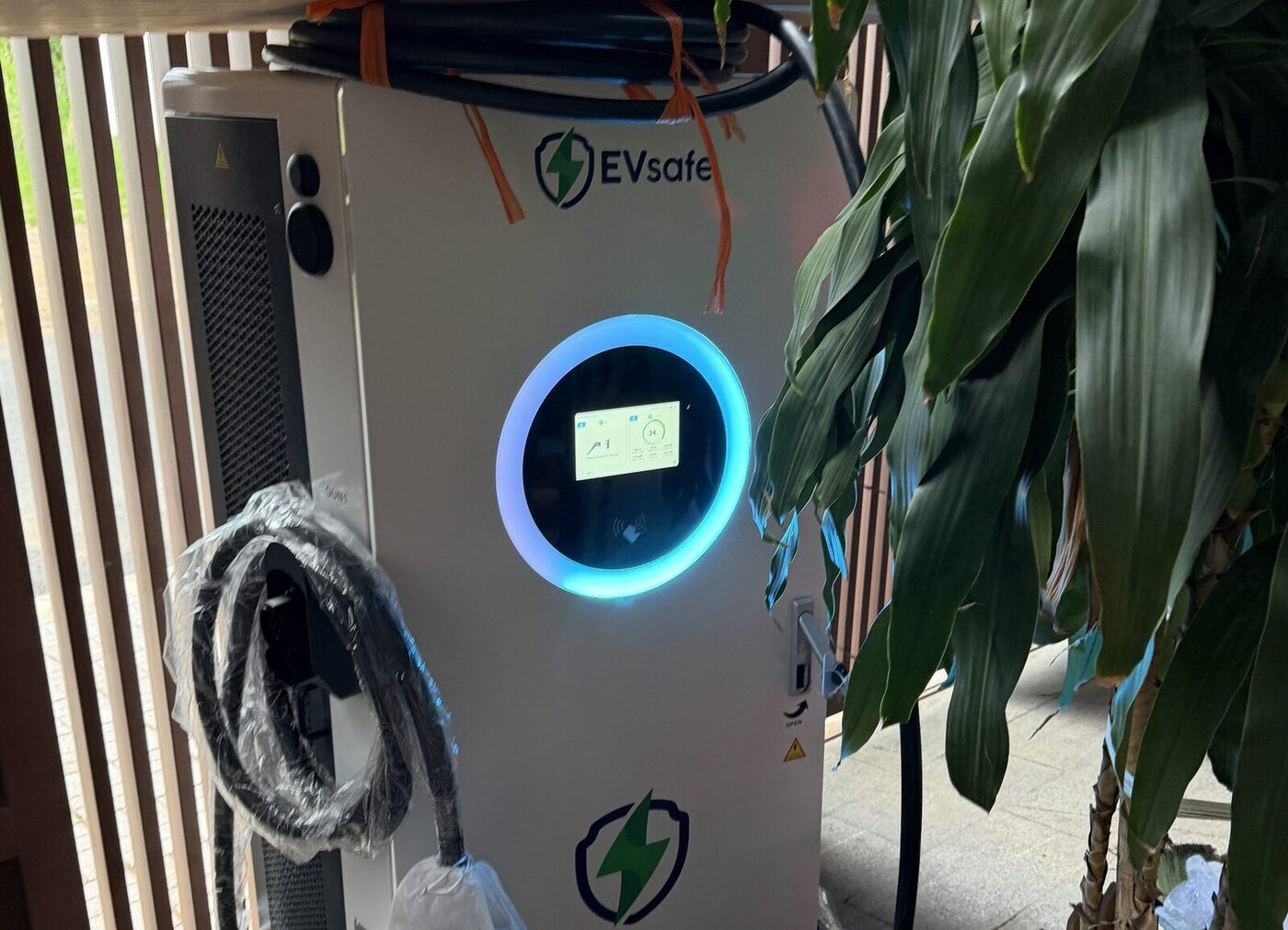
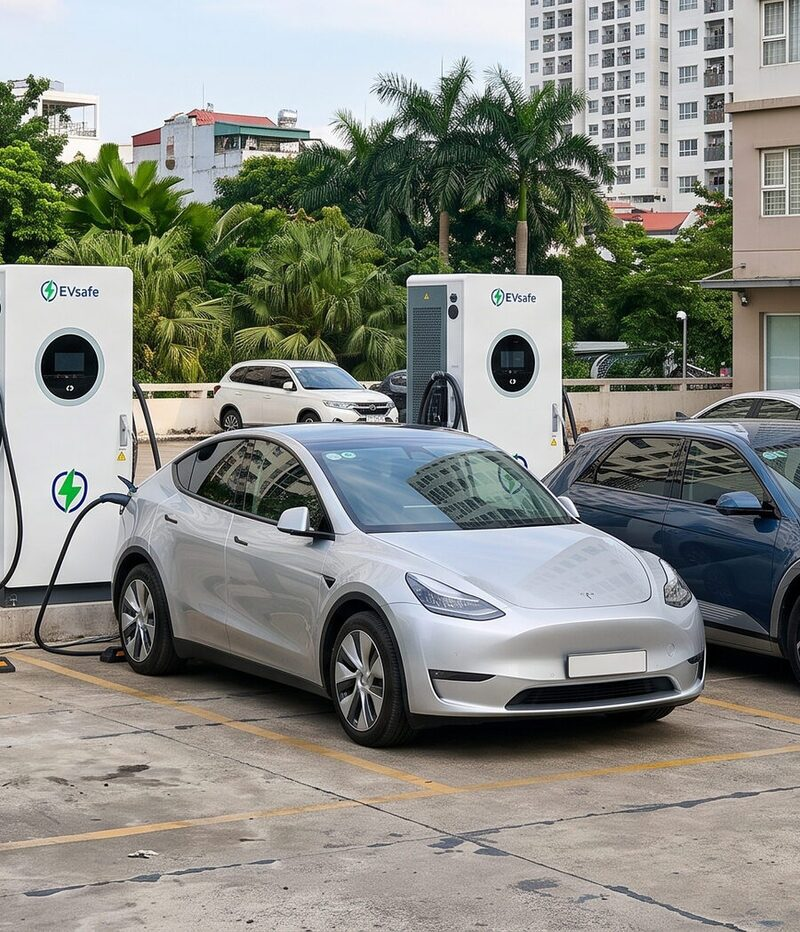
Is operating an electric vehicle charging station profitable? Analyzing real operating data: revenue, return on investment by type of location and 2 revenue-sharing models of EVsafe.
Is operating an electric vehicle charging station profitable?
Yes - but only when three conditions are met: the location has a sufficiently high density of electric vehicles, the operating model controls electricity and maintenance costs, and there is a suitable revenue-sharing mechanism for investors. Lacking any of these, the charging station may fall into the situation of "being installed but not profitable" - with invested capital stuck in equipment while the number of charging sessions is too low to cover costs.
To answer with numbers instead of intuition, this article takes a real EVsafe charging station as an example, then expands it into a calculation framework for the three most common types of locations.
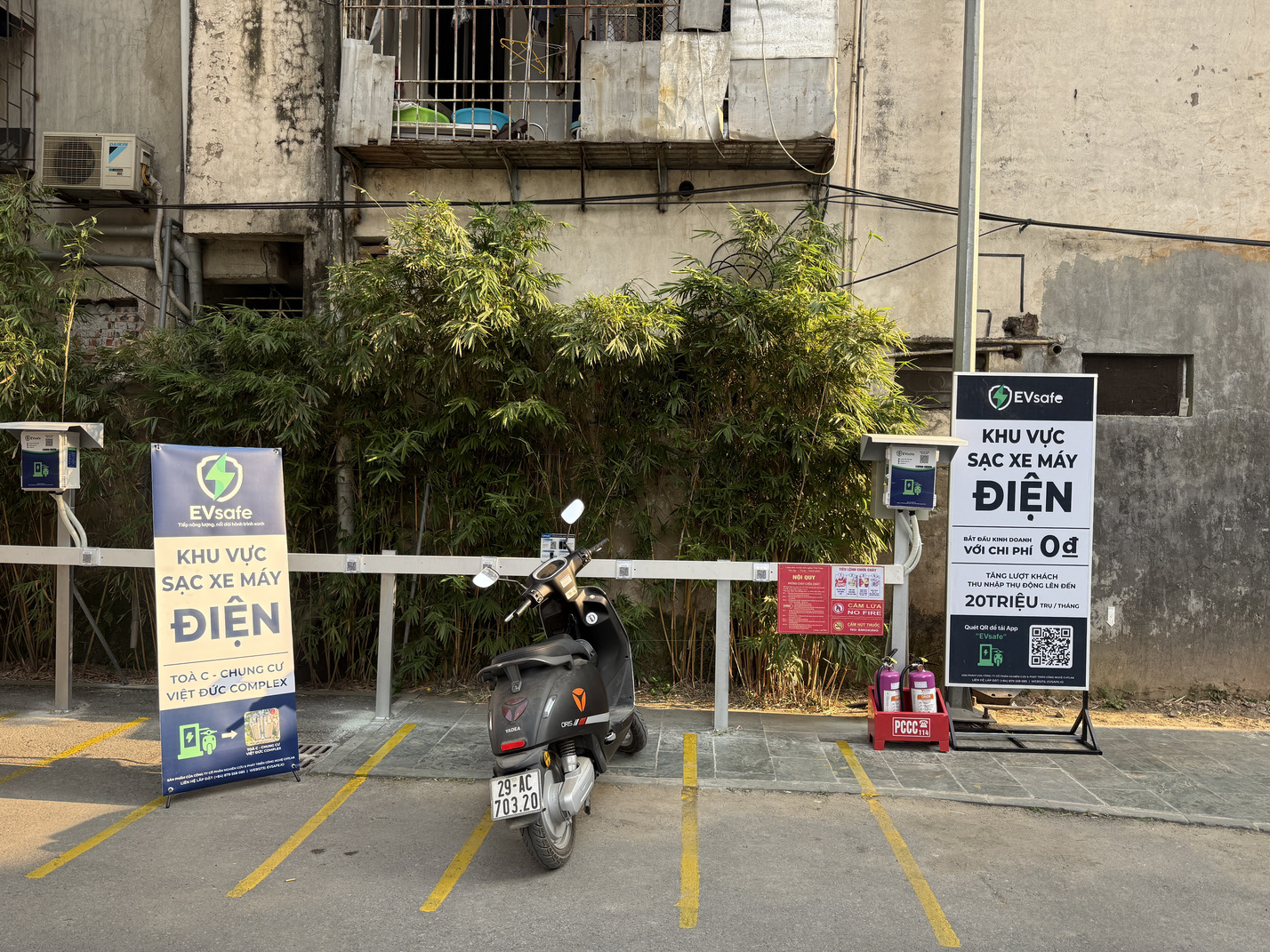
Example: a mixed-use apartment building charging station in Thanh Xuân, Hà Nội
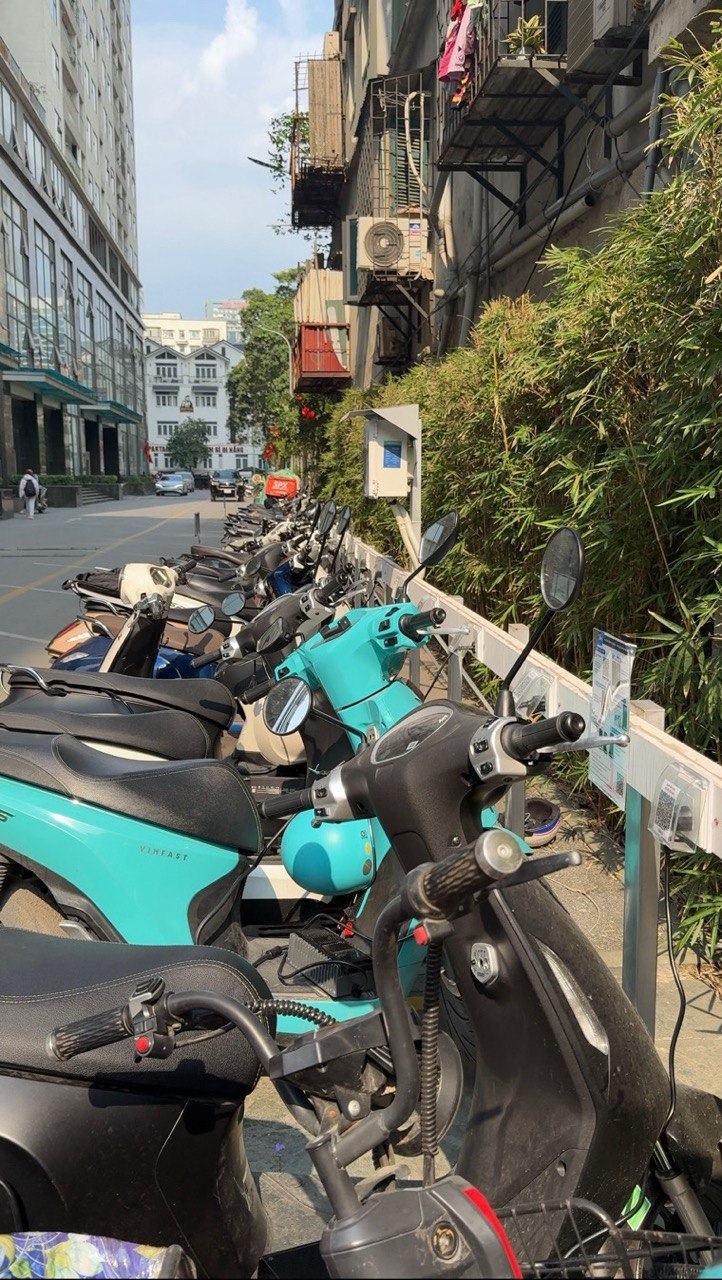
Taking the EVsafe charging station at a mixed-use apartment building in the Nguyễn Trãi - Thanh Xuân area (Hà Nội) as an example. This is a densely populated residential area, where residents park their vehicles overnight in the building's basement - exactly the group of customers who need to charge their vehicles daily.
Actual setup
- Scale: 2 charging pillars, each with 10 ports - a total of 20 ports
- Type: mixed-type station, with electric motorcycles as the main focus
- Power per port: 1.2-2.2 kW (AC standard for civilian electric motorcycles)
- Payment: residents pay by scanning QR code/App, no need for an attendant to collect money
- Safety: automatic shutdown in case of overheating/overload/leakage, linked to the building's fire alarm system
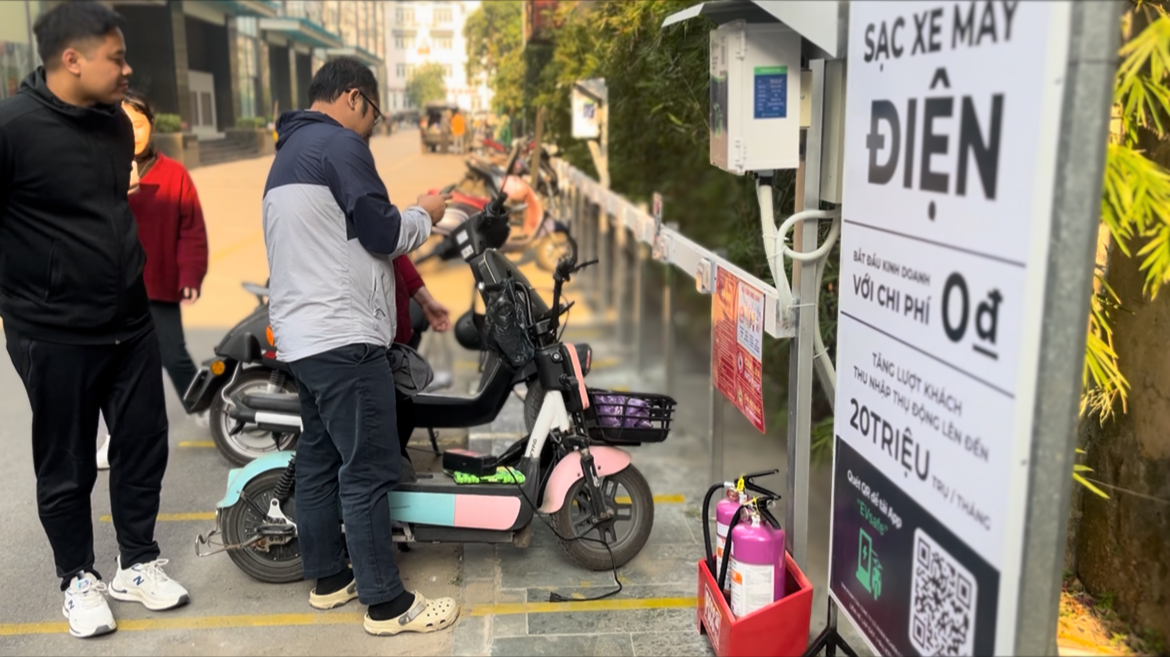
Revenue calculation
- Average number of charging sessions per pillar per day: ~30 sessions
- Total charging sessions per day (2 charging stations): ~60 sessions
- Average price per session: ~10,000đ
- Gross revenue per month: ~60 × 10,000đ × 30 days = ~18,000,000đ
- Cost of electricity + operating platform: ~50% of revenue (~9,000,000đ)
- Net profit per month: ~9,000,000đ
- Time to recoup investment in equipment (landlord self-invests): ~more than 4 months
The recoupment period of more than 4 months comes from the fact that this is a high-density area with repeated charging sessions. Not all locations can achieve this efficiency - the following section will break it down by location type.
Two cooperation models: whoever invests, keeps the majority
The key point that determines profit/loss for the landlord is who invests in the equipment. EVsafe applies two transparent mechanisms:
- Landlord self-invests in equipment → landlord keeps 90%, EVsafe 10%. The landlord invests in buying charging stations, in exchange for keeping the majority of the revenue; EVsafe collects platform operating fees, monitoring, and maintenance. Suitable for landlords with capital who want to maximize long-term cash flow - like the example above, recouping equipment investment in just over 4 months.
- EVsafe invests 0 đồng → EVsafe keeps 60%, landlord 40%. The landlord does not invest a single đồng, does not worry about equipment, fire safety, or reconciliation; receives 40% of revenue as pure passive income. Suitable for landlords who do not want to invest or do not have experience operating electrical infrastructure.
Reconciliation and fixed money transfer on the 15th and 30th of each month, transparently according to actual kWh measured through the IoT system - no estimation, no gray area for dispute.
Framework for calculating return on investment by location type
The table below is a reference estimate (not a commitment), assuming the landlord self-invests in equipment and keeps 90% of revenue, with a rate of ~10,000đ/charge and electricity and operating costs of ~50%. Actual numbers vary depending on vehicle density and electricity prices in each area.
- Apartment buildings / mixed-use buildings · Recommended number of ports: 10-20 ports · Investment cost (self-installation): 60-120 million · Average daily charges: 40-70 charges · Gross monthly revenue: 12-21 million · Payback period: 4-7 months
- Boarding houses / mini apartments (CCMN) · Recommended number of ports: 4-10 ports · Investment cost (self-installation): 25-55 million · Average daily charges: 15-35 charges · Gross monthly revenue: 4.5-10.5 million · Payback period: 5-8 months
- F&B / cafes · Recommended number of ports: 3-8 ports · Investment cost (self-installation): 20-45 million · Average daily charges: 8-20 charges · Gross monthly revenue: 2.4-6 million · Payback period: 7-11 months
Three structural observations:
- Boarding houses/CCMN have fast payback thanks to low CAPEX and high charging customer ratio (boarders rarely have private charging spaces), even though absolute revenue is lower than in apartment buildings.
- Apartment buildings/mixed-use buildings generate the highest absolute revenue thanks to many ports, but CAPEX is also higher - this is why many apartment building owners choose the EVsafe model with 0 đồng investment instead of self-investing instead of putting in their own capital.
- F&B has the lowest direct ROI if only considering charging revenue, because the primary goal is often to keep customers (increase time spent at the establishment) rather than selling electricity.
See detailed cost breakdown (equipment, installation, fire safety, software) at EVsafe's cost and consultation page.
4 factors that determine whether a charging station is profitable or not
1. Location and actual density of electric vehicles
The location determines the majority of the value of a charging station - not because of its "prime" location, but because of the density of electric vehicles that regularly reside within the service radius. A 6-port station located in the basement of a 300-unit apartment building can be busier than a 20-port station located on a street without a stable parking lot. Before installation, it's better to count the actual number of electric vehicles parked overnight or visiting the area, rather than estimating based on area size.
2. Recharging frequency
Revenue comes from frequency, not the price per charge (which is already competitive). A location with daily repeat customers (apartment residents, tenants) creates a more stable cash flow than occasional customers who charge only once.
3. Electricity costs and hidden operating costs
The input electricity price directly affects profit margins - many individual investors only look at the selling price to customers and forget about the actual difference paid. Adding maintenance, replacement of worn-out components, and labor costs for troubleshooting if self-operated - these are expenses not included in the initial Excel table but erode profits over time.
4. Revenue sharing model
Choosing the wrong model - for example, investing all the capital in a location with low vehicle density - is the most common reason individual investors lose money, not because of poor charging technology. If the vehicle density is uncertain, the EVsafe model invests 0 dong (the location owner receives 40%) and transfers the capital risk to the operating unit.
Compared to saving or pure rental income
Electric vehicle charging stations are not the fastest way to make a profit, but they have characteristics that saving or renting do not: utilizing vacant space (parking basements, yard corners) without competing with the primary function.
- Saving: 12-month term interest rates are commonly around 5-6%/year (market reference) - safe, high liquidity, but do not create added value for real estate.
- Pure rental income: more stable cash flow but requires finding tenants, risks vacancies, and often requires periodic renovations.
- Charging station (0 đồng model): no capital required, no need to find "tenants", but cash flow depends on actual charging sessions - fluctuating with seasons and the pace of electric vehicle adoption in the area.
For property owners who already have unprofitable space, the revenue-sharing charging station model has almost no opportunity cost - since that space did not generate any cash flow beforehand.
Real risks in operating a charging station and how EVsafe addresses them
Fire safety and legal risks. Charging stations are high-power electrical infrastructure - incorrect connections, improper load distribution, or lack of fire safety certification can cause the station to be suspended, or even lead to fires and explosions. According to Directive No. 27/CĐ-TTg (March 31, 2026), the Government is accelerating the completion of charging station standards in apartments and high-rise buildings - compliance requirements will become increasingly strict. EVsafe addresses this by using 3-layer protected electrical cabinets (overheating, overloading, automatic disconnection of leakage current), linked to the building's fire alarm system, and handing over complete certification and safety inspection records.
Maintenance and disruption risks. Faulty equipment or lost connections that are not addressed promptly can cause customers to leave. EVsafe commits to an SLA with remote response times of under 15 minutes, on-site handling within 2-4 hours in inner cities, and an offline mode to locally store data when the network is down to prevent loss of revenue logs.
Risk of non-transparent reconciliation. This is a common issue that many self-operating investors face: they cannot verify the actual number of kWh sold, leading to disputes. EVsafe measures kWh in real-time via IoT, publicly displaying it on the app for both chargers and venue owners, and reconciling it on a fixed schedule (15th and 30th of each month).
Conclusion: where to start?
The electric vehicle charging station business is profitable when the location has a sufficient density of vehicles, the operating model controls hidden costs, and the revenue-sharing mechanism matches the ability to bear capital risks. For example, the aforementioned mixed-use apartment building shows that a location with the right customer group can recoup equipment costs in just over 4 months - or create passive income without capital if you choose the EVsafe model with a 0 dong investment.
If you have empty space (parking garage, yard, facade) and want to know if a charging station is suitable for your location, the first step should be to survey the electrical load and estimate the actual number of charging sessions - not buying equipment first and then calculating later.