
The most popular electric motorbike charging station solution
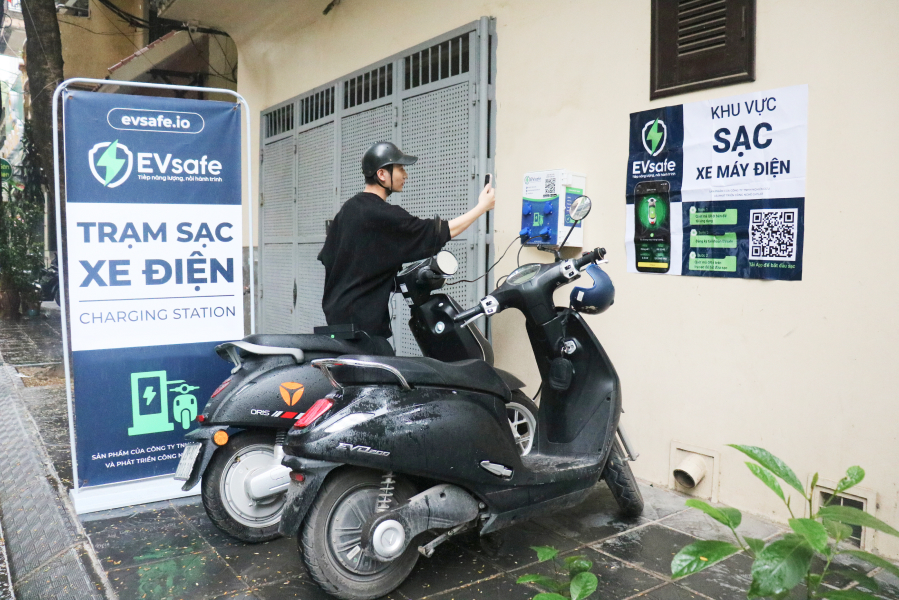
Electric motorbike charging station
properly standardized safety - someone is accountable
Highest demand in urban areas - also the place most prone to fire and explosion if “installed improvisationally”. EVsafe deploys according to a model install + operate + monitor to cut the risk at the root.
No selling of standalone equipment
Avoid the “buy it and wire it up yourself” off-standard scenario.
No leaving responsibility open-ended
There's operation, monitoring, and incident handling.
Property owner is hands-free
No collecting cash, no technical standby duty.
EVsafe only deploy when the electrical infrastructure & location meet the conditions
safe
safety.
Fail: we refuse so that you don't have to “bear the risk.”
electric
before installation
RCBOanti-
dedicated shock protection
Monitormonitoring &
incident alerting
5 “spontaneous” faults that lead to fire/explosion
The problem is not the “socket”.
The problem lies in how it's wired - how it's monitored - and who's responsible.
Electric motorbike charging stations run at high power for many continuous hours. Just one wrong link and
the parking basement into a “hot spot”.Tapping into the shared household power line
overload
Overnight charging + many vehicles at once → wires gradually heat up, joints degrade, increasing the risk of
short circuit.
Sockets/wiring not rated for the load
heating
Household sockets + extension cords + thin wires → local heating at contact points, melting plastic,
discharge
sparks.
No dedicated anti-shock RCBO
leakage
Current leakage/electric shock not cut off in time → a small incident becomes a big one.
No temperature & overload monitoring
no alarm
No one knows the system is “hot” until… there's a burning smell.
“No one is accountable”
blame
When an incident occurs: the electrician blames the equipment, the equipment blames the user, and in the en
together
the property owner bears it.
EVsafe safety checklist
Safety standards are a “system.”
Not a single product. Not a single worker. But a set of technical + operational criteria
+
monitoring.
Measure load & separate the charging circuit
Not shared carelessly with the
living
use.
Dedicated anti-shock RCBO
Fast cutoff on leakage / risk
shock.
Industrial sockets rated for the load
Reduce heat at contact points, prevent melting
of the plastic.
Overheating/overload alert
Any sign of abnormality is handled immediately.
Installation location doesn't block the emergency exit
Prioritize tidy - clean - with cable management.
A dedicated operator bears responsibility
responsibility
No “sell and that's it”.
EVsafe's principle: fails the checklist → no
deploy
deploy.
Doing it halfway just to “have a station” is the fastest way to create risk.
Neat wiring with conduit/trunking Periodic inspection Operation log
at
the legal/standards section below.
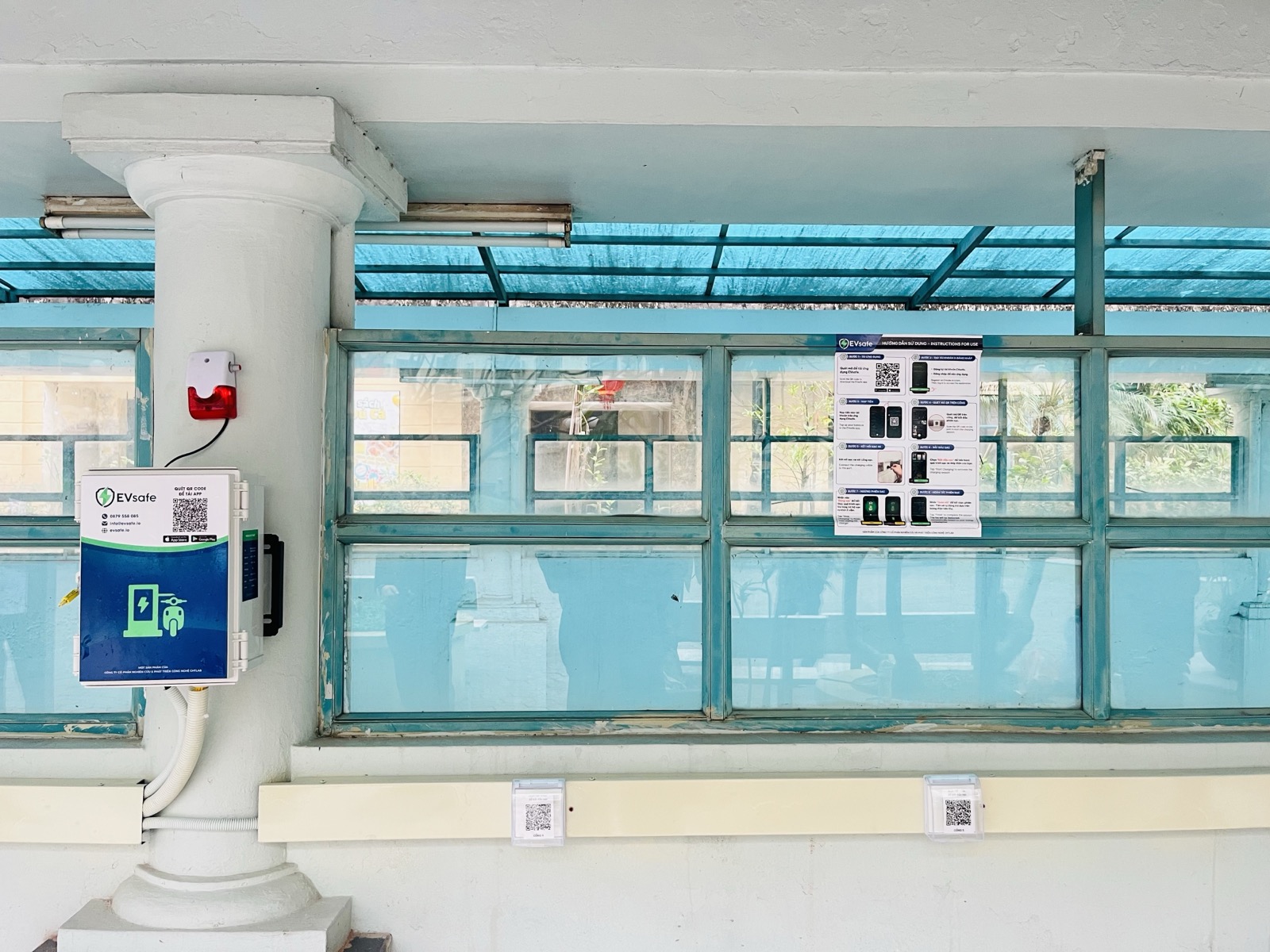
Design
Neat - clean - hard to tamper with
Manage wiring, limit “extension cords.”
Safe branch separation
Has dedicated protection for the charging line.
Electric motorbike hardware
Industrial-grade for continuous operation -
no overheating, no short circuits, no arguments
EVsafe is optimized for the electric-motorbike problem: many vehicles, long charging, overnight charging.
Every component serves 1 goal: reducing heat-generation & fault risk
wiring
connection.
Industrial sockets rated for the load
Firm contact, reducing heat at the plug point. Not “loose” like household sockets when running
over the long term.
Dedicated anti-shock RCBO
Any anomaly (leakage/shock) triggers a fast cutoff. Don't let a small incident drag on into a fire.
Overheat/overload monitoring
The station doesn't “suffer in silence.” Any sign of abnormal heat triggers an alert and
handle
resolve.
Waterproof, dustproof
The basement parking environment is damp, dusty, and corrosive. Components must withstand long operation
limit.
Configuration suggestions by vehicle density
optimize operationoperate
Small
2-6 vehicles / day
Suitable for stores, F&B, home yards.
Medium
10-30 vehicles / day
Rental housing, small apartment buildings, parking lots.
Large
30-60+ vehicles / day
Requires infrastructure design & strict monitoring.
*The actual configuration depends on electrical load and the site. EVsafe surveys then “tailors” the infrastructure,
not installed by guesswork.
EVsafe's difference isn't “looking nicer.”
But rather: right load - with protection - with monitoring - with responsibili
responsibility.
Operating experience
Scan to charge -
revenue & safety neatly in your phone
No “collecting loose cash,” no “watching it yourself.” The system records charging sessions, auto-reconciles, and reports transparently.
1
For Charging Customers
Done in 15 seconds
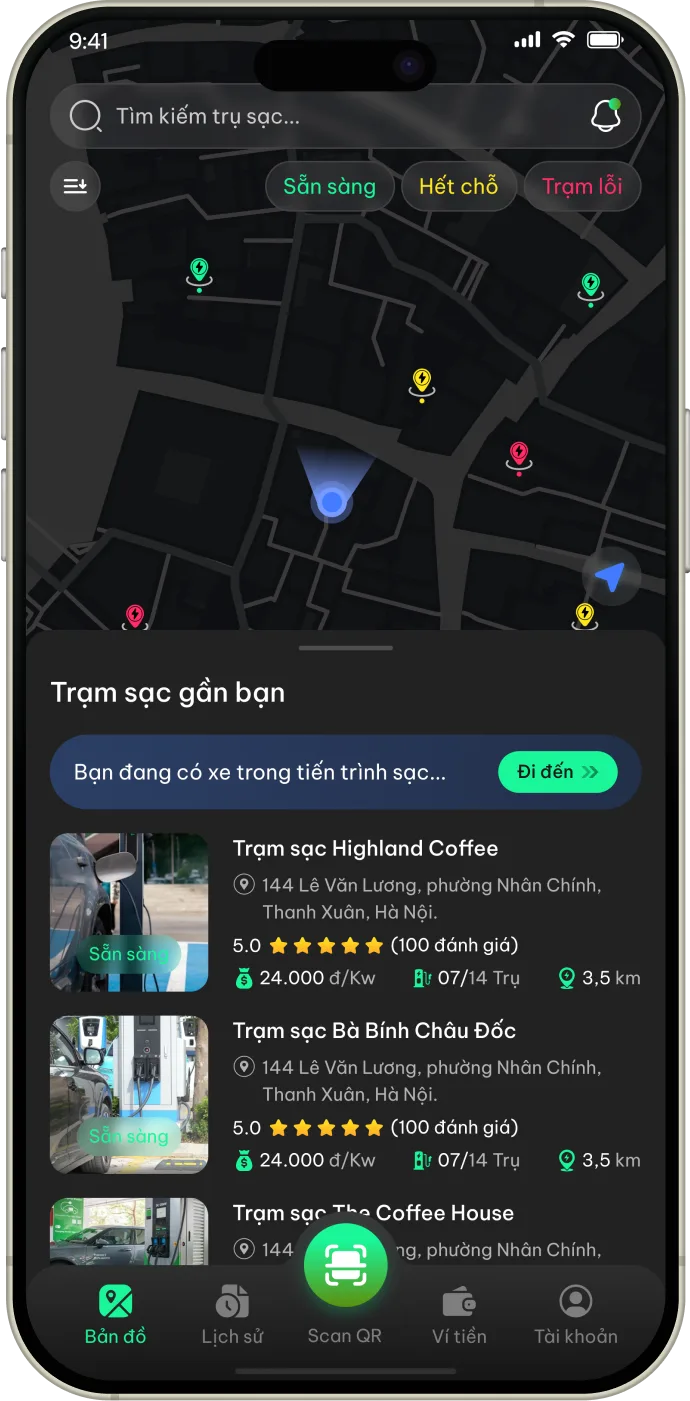
B1
Scan QR
Right post - right location
B2
Choose a package
By amount / by hour
B3
Payment
E-wallet / QRPay
Charging
Session #A9X2
No need to ask the homeowner
Customers operate it themselves - reducing dispu
dispute.
Has automatic “safety rules”
Anomalies trigger alerts / cutoff per
process
process.
2
For Site Owners
transparency is mandatory
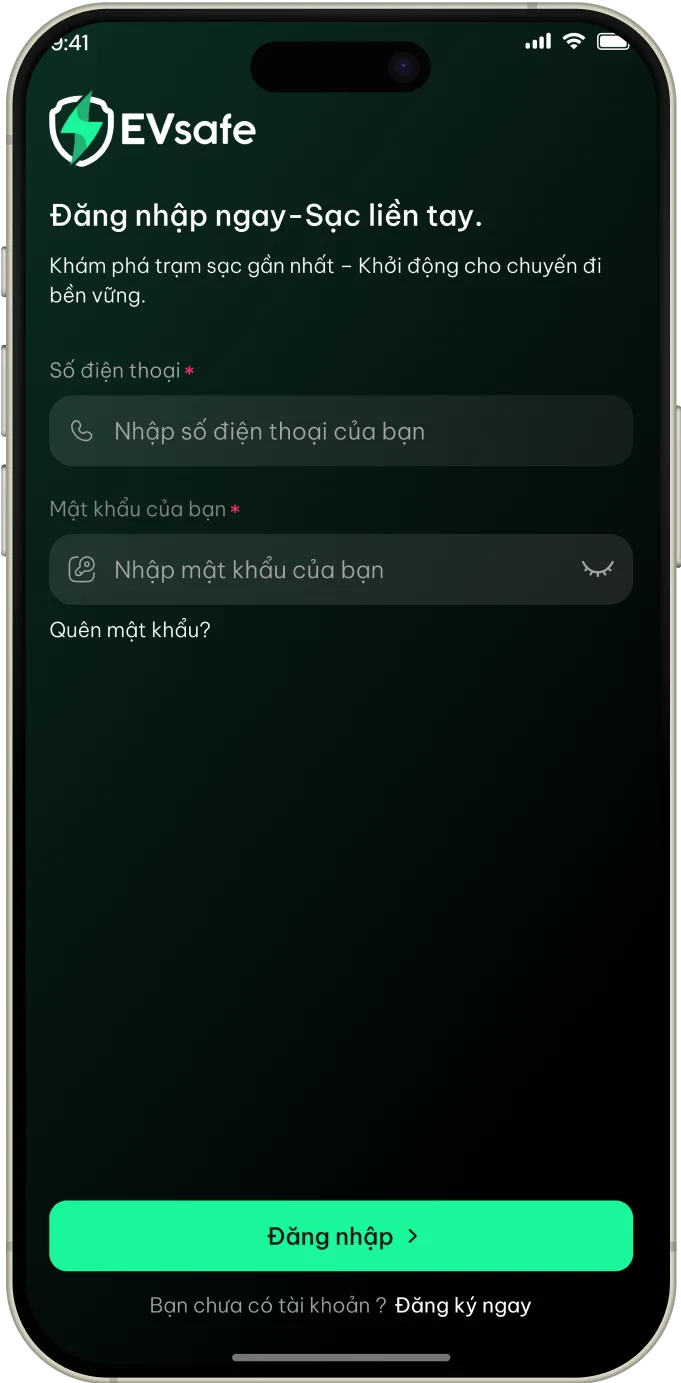
Revenue
revenue
***đ
+15% MoM
Session
charging
486
Has logs & reconciliation
Alert
warning
0
Stable system
Automatic reconciliation & payout
cycle of the 5th-10th monthlyReport
Real time
Session log
By post
Alerts
Incident
No ambiguity in revenue
Each session has a log: time, money,
status
status.
Situation-based alerts
Current/equipment anomaly → alert & handle
management
per SOP.
The property owner doesn't need to “stand in the middle” collecting money and explaining.
The system auto-records - auto-reconciles - auto-reports.
configuration based on charging behavior
A “tailored” solution for each location -
no one-size-fits-all formula
EVsafe designs the configuration based on vehicle density,
peak hours and risk
oper-
operation.
Goal: run smoothly, safely, and with transparent revenue.
Quick configuration filter (suggestions)
Not a form. Just so you understand how EVsafe “measures” a location using operational data.
vehicle density
2-6 / 10-50+
peak hours
19:00-01:00
the main risks
wiring / overload
Pre-paid & charging session logs
Anti-tamper & camera recommendation
large scale
Apartment building & Rental housing
The real problem: overnight charging, high load, tangled wiring.
EVsafe standardizes the system to reduce fire & explosion risk and disputes over electricity bills.
vehicle density
10 - 50+ vehicles
peak hours
19:00 - 01:00
- Pre-paid + automatic reconciliation, no cash handling.
- Separate dedicated power + monitoring to limit overload.
View the recommended configuration
enhance the experience
Shops & F&B
The real problem: keep customers longer, but must not be messy
and
without taking up space.
EVsafe optimizes aesthetics + QR-scan operation.
vehicle density
2 - 6 vehicles
peak hours
17:00 - 22:00
- Customers scan the QR themselves, without bothering staff.
- Compact design, minimizing cables & collisions.
View the recommended configuration
compact
Street-front houses
The real problem: want extra income, but must electrically separated
living
life and prevent vandalism.
EVsafe prioritizes safety + tamper resistance.
vehicle density
1 - 4 vehicles
peak hours
all day
- Separate dedicated power, reducing the risk of affecting the household.
- Recommended to install in areas with cameras / lighting.
View the recommended configuration
Deployment criteria
EVsafe only deploys when input power, installation location
and fire-safety conditions meet the standard. No “forcing
install”
to win the contract.
goal
Safety first
results
Long-term operation
Location does not obstruct escape routes
Separate circuit + RCBO protection
Real-world deployment SOP
Installation & operation process
per operator standards
Unlike an electrician who installs “just to be done,” EVsafe deploys via a process with measurement - testing - handover -
has
monitoring.
Goal: fire & explosion safety + transparent
revenue transparency.
3 phases - each phase has
“deliverables”
Not meeting safety conditions → stop. No “forcing the installation” to win the contract.
phase 1
Survey
phase 2
Install & Test
phase 3
Operation
Test safety cut-off
Charging session log
Hand over the checklist
1
safety gate
Survey & assessment
Determine whether to deploy or not. If the power/wiring/location doesn't qualify → EVsafe don't install.
-
Measure the actual electrical load, check wiring & connection points.
-
Choose a location that doesn't block the emergency exit and minimizes thermal hotspots.
- Propose a configuration based on vehicle density & peak hours.
deliverables
Wiring plan + configuration + checklist of condi
conditions
2
install & test
Installation & configuration
Separate power, dedicated protection, payment configuration & charging session management. Prioritize aesthetics to avoid
“a mess of wiring.”
- Separate the power line + Anti-shock RCBO for each
branch.
- Run wiring with conduit/trunking, minimize joints, reduce hot spots.
- Configure QR/pricing, assign station owner permissions & reconciliation.
mandatory test
Cut-off test - overload / current leakage / abnormal condition
anomalies
3
operation
Operation & monitoring
We don't leave the station for the owner to manage alone. EVsafe monitors status, logs charging sessions, alerts & supports
handle
resolve remotely.
- Monitor post status: operating / fault / overload.
- Charging session log: time, kWh, revenue, refunds (if any).
- Early warning upon detecting abnormal signs.
Suggested SLA
Handle remotely first
transparent
automatic reconciliation
handover checklist (detailed)
You get everything you need for stable operation - nothing vague, no “verbal promises”.
Cutoff test record
QR/pricing
Operating guide
The reality out there
Electric motorbikes charging “spontaneously”
is a systemic riskA household socket is made for plugging in a fan - a TV. But charging an electric motorbike is load
high, for a long time, usually overnight.
Get one link wrong (wire, CB, joint, overload) → a hot spot
heat and incidents occur when no one is watching.
Fire/explosion risk & responsibility
When an incident occurs, the site owner is the first to be asked: “Who installed it? Is the circuit separated?
Yes
anti-shock protection? Is there a cut-off test?”
Loss of power control & leakage
“A flat 100k/month” or tapping into shared household power → easy to lose money on electricity, easy to dispute
disputes, prone to
giving rise to unpleasant situations.
The homeowner gets dragged into operations
“Who lost the money?”, “Charging fault?”, “Breaker tripped?” - without a system, everything
goes round in circles
about texting and calling the homeowner.
EVsafe is the operator - not “selling
post”
We are responsible from electrical configuration, safety testing, to monitoring & reconcil
reconciliation.
The property owner gets the result: safe + transparent + less
the job.
Separate power
Anti-shock RCBO + load configuration by vehicle density. Reduce thermal hot spots, reduce incidents
“tripping
CB”.
Charging-session monitoring
Post status, charging-session logs, anomaly alerts. Any issue is handled per the proce
process
the operating unit.
Transparent reconciliation
Customers scan the QR and prepay, revenue is recorded automatically. The homeowner collects no small change,
no
“arguing.”
Clear responsibility
There are standards, a checklist, and handover. No “install and vanish.”
Revenue logic (easy to understand)
no need to guess blindly
1) density
vehicle
How many vehicles / point
2) behavior
scope
charging
Sessions/day + peak hours
3) configuration
model
operation
Pricing + reconciliation
EVsafe surveys to finalize a suitable configuration: no overloading the electrical system, yet still optimizing
experience
charging experience & revenue.
Compliance & handover documents
Safety is not in a “promise”.
It's in the dossierdocuments &
acceptance.
EVsafe deploys according to a technical standards set, along with an acceptance checklist and handover dossier so the Board
management
/ Property owner
can verify - and take responsibility properly.
Comply with EVsafe's Stack
4 control layers: Standard → Design →
Acceptance → Operation.
1) Reference standards & regulations
The system is designed to follow EV charging standards and safety principles
safety
electrical/fire-safety applicable to the placement point.
(The detailed list is on the standards page.)
TCVN 13078:2020 (IEC 61851)
Relevant fire-safety guidelines
2) pre-operation acceptance checklist
EVsafe accepts per a checklist: power separation, anti-shock protection, testing
cut-off,
warning labels, wiring/connection points, escape routes…
RCBO / emergency cut-off
Load measurement log &
check
check for overheating
Warning label
&
usage instructions
Current photo
status &
wiring route diagram
3) A handover dossier “ready for inspection”
Not just install and done. EVsafe hands over the dossier so the site owner/party
management
manage storage and reconcile when needed.
(as-built)
Equipment CO/CQ
(if applicable
applicable)
Acceptance record
collection &
checklist
Operating guide
&
incident handling
4) Operating responsibility after installation
Someone is responsible. There's a handling process. There are logs for tracing.
When an anomaly arises, the system prioritizes safe cut-off beforehand.
point of contact
technical on-call
incident
handling process
evidence
logs & reports
The “proof” the management board likes
No emotional arguments. Look at the documents, checklist, logs, and acceptance photos.
Photos of current condition & wiring route
Easy to cross-check when an inspection is needed.
Safety & hotspot testing
checklist for cutoff testing & anomaly inspection.
Acceptance & handover record
Has signatures, has dates, has a checklist.
Periodic revenue reconciliation
Transparent, minimizing disputes.
FAQ - Homeowners ask directly, EVsafe answers directly
No vague “general safety” talk. We answer by operating mechanism + responsibility + reconciliation method.
Multi-layer safety cut-off
Prioritize cutting off before it becomes an incident.
Pre-paid, no debt
No more “who pays this month?”.
Periodic reconciliation
Has data, has logs, easy to check.
There's an operator taking responsibility
No “install and abandon.”
Safe safety
If a vehicle short-circuits during overnight charging, who is liable?
Mechanism: The station has an anti-shock protection layer and anomaly monitor
anomalies;
when signs of risk are detected, the system prioritizes safe cutoff
safety.
Responsibility: EVsafe operates and monitors,
no
“sell and be done.”
standards & safety principles
Revenue revenue
Do I have to collect electricity fees room by room?
No. Users scan the QR and pay in advance themselves
(pre-paid).
No “electricity debt” arises.
Reconciliation: There are periodic reports for the homeowner to check
check
transparent revenue.
operating & reconciliation process
Operate operate
What if the whole rental block loses power due to charging overload?
Principle: EVsafe deploys according to a suitable load configuration
infrastructure
structure, and separate protection per branch to avoid crashing the shared power system.
Acceptance: There's a checklist checking load/points
wiring
wiring before operation.
EVsafe
survey & configuration
Pay- -ment
Customers say “I charged little” and then dispute the bill?
Mechanism: The station records charging sessions via the system. Users
prepayment - charge exactly per session.
Result: Reduce disputes of the “monthly flat-fee” kind
and
avoiding the homeowner losing money on electricity.
Legal management
Building management asks: what's in the handover documents?
Yes. EVsafe hands over a document set including the electrical/as-built diagram,
an acceptance checklist, operating instructions, and equipment documentation per the deployment scope.
“Docu
handover file”
Safe security
Installing in a shared yard - is there a fear of vandalism / theft?
Design: Device casing meets industrial impact-resistance standards
and
water-resistant per the deployment configuration.
Recommendation: EVsafe always prioritizes a location with
cameras/lights, and a tidy wiring route layout to reduce the risk of tampering.
Suitable suitable
At what point will EVsafe decline deployment?
EVsafe reserves the right to refuse if the electrical infrastructure/location does not ensure
protect
safety principles (load, wiring route, escape route, operating conditions).
Goal: won't deploy at any cost to
avoid
risk for the property owner.
Technical technical
Can VinFast/DatBike/Yadea… vehicles share the same one?
EVsafe configures according to the actual needs of the location. For common electric motorbikes, users charge
as per
the vehicle (depending on model) and usage procedures are clearly instructed at the charging point.
If the site has a “mixed multiple vehicle types” demand, EVsafe will survey to choose the config
model
suitable.
Do you need technical answers based on your specific site's condition?