With just a few small changes to how you charge your electric motorbike, you can help the battery run more stably and last longer over time.
Charging your electric motorbike the right way plays an extremely important role in maintaining battery lifespan and long-term operating performance. Many electric motorbike users in Vietnam often experience rapid battery degradation after just 1-2 years due to unscientific charging habits. Below are 5 charging habits that help the battery operate more stably and last longer over time.
1. Avoid letting the battery drop too low too frequently
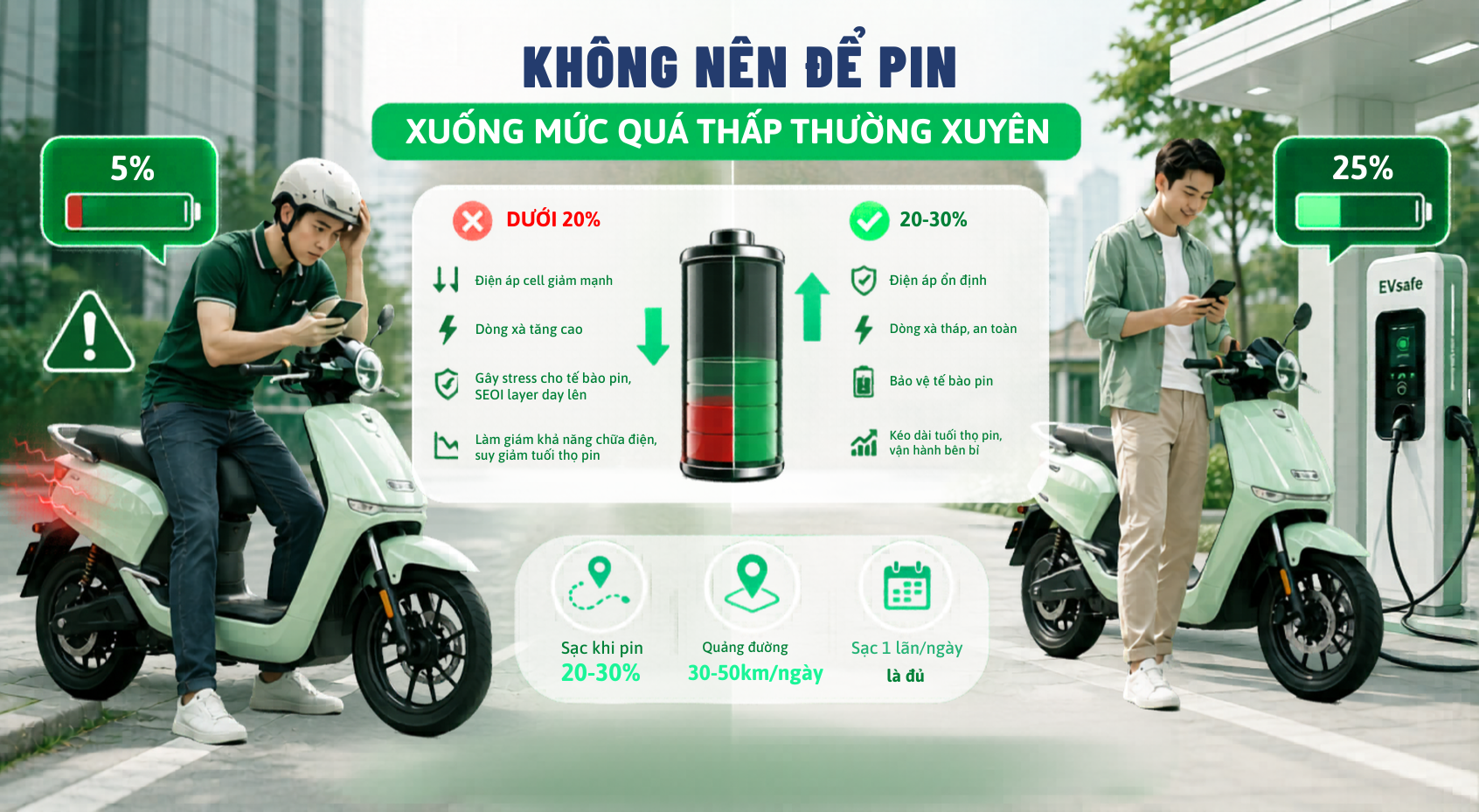
Most electric vehicle users in Vietnam have the habit of riding until the battery drops below 10% or even hits empty before charging. This is one of the main causes of rapid battery degradation and long-term impact on the entire vehicle system.
In terms of operating principles, when the battery drops below 20%, the cell voltage falls sharply and the discharge current rises to maintain motor power. Repeating this situation frequently stresses the battery cells, causing the SEI layer (protective film) to thicken and reducing the battery's charge capacity.
Users should proactively charge when the battery is still around 20-30%. With an average travel distance of 30-50km/day in the city, you only need to charge once a day. This habit not only protects the battery but also helps you avoid running out of power mid-journey - a very unpleasant experience with electric vehicles.
2. You don't necessarily have to charge to 100% every time
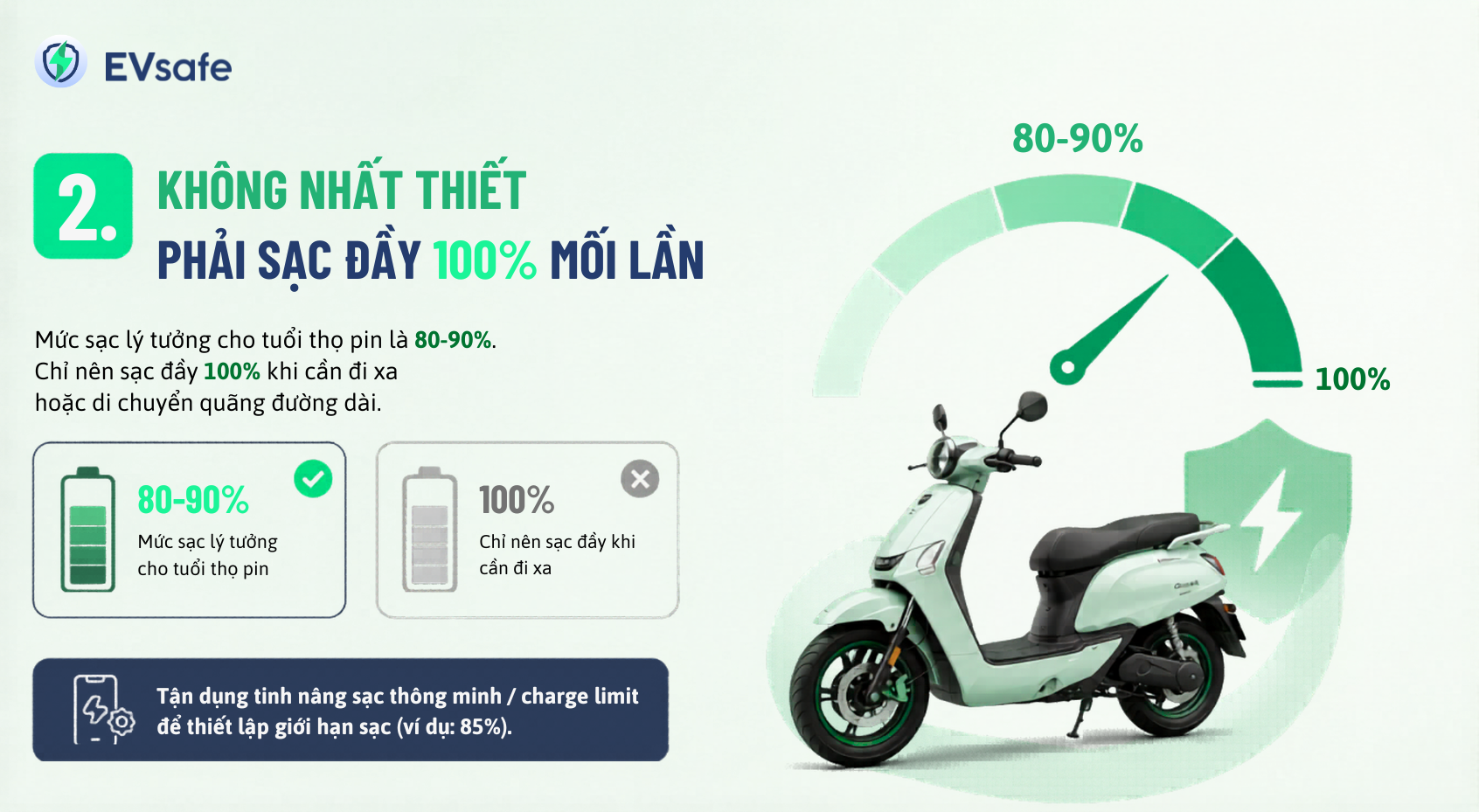
Many people today still hold the belief that “the fuller the battery, the better.” However, with lithium-ion NMC or LFP batteries in many of today's electric vehicles, continuously keeping the voltage at a high level (above 4.2V/cell) accelerates electrolyte decomposition and cathode oxidation.
Meanwhile, for everyday use, the 80-90% range is the ideal level for battery lifespan. Electric vehicles should only be charged to 100% when preparing for a long trip (over 70-80km) or when a reserve is needed for a long travel distance.
Many modern electric motorbikes already have a “smart charging” or “charge limit” feature that lets you set charging to stop at 85%. Take advantage of this feature to balance usage needs and battery lifespan.
3. Limit continuous fast charging when unnecessary
Fast charging (DC fast charging) at high power offers great convenience, but it also generates more heat. High battery temperature (above 45°C) is one of the fastest factors in reducing battery lifespan.
When fast charging frequently, the battery management system (BMS) has to work harder to control heat and balance cells. In the long run, this action accelerates battery degradation. Therefore, when charging an electric motorbike, users should apply a few of the following notes:
- Prioritize slow charging (AC) at night or when the vehicle is idle for a long time.
- Only use fast charging when truly needed (long trips, packed schedules).
A dense and stable charging station network makes it easy for you to choose the appropriate charging speed instead of always having to “rescue” yourself.
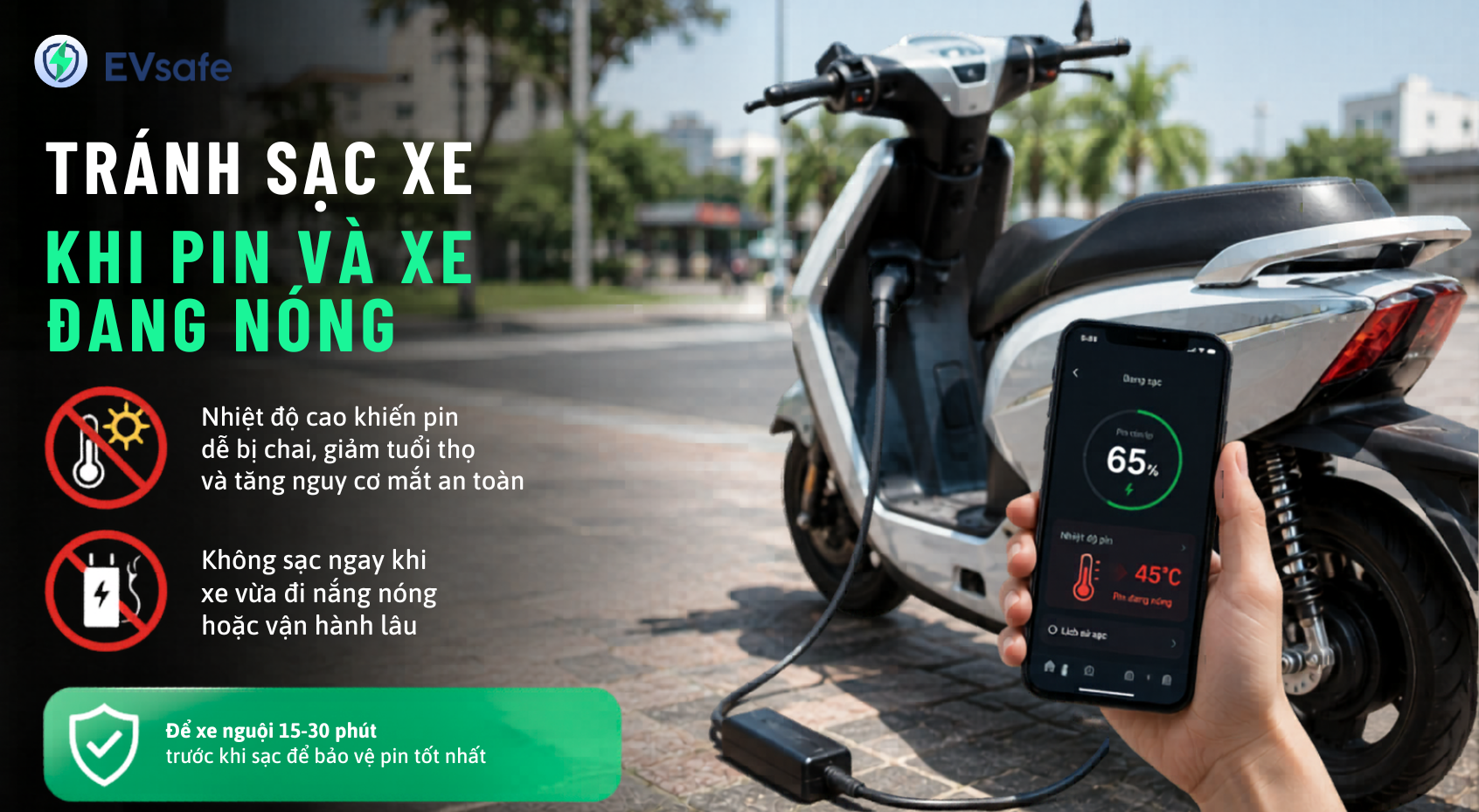
4. Avoid charging the vehicle when the battery and vehicle are hot
Temperature is the “number 1 enemy” of lithium-ion batteries in electric vehicles in general. Charging at temperatures above 40°C increases unwanted chemical reactions, leading to lithium plating (lithium sticking to the anode) - the cause of permanent capacity loss.
To limit this risk, keep in mind the following suggestions:
- Do not charge immediately after riding a long distance (especially under the sun).
- Park the vehicle in an airy, covered place.
- Avoid charging in an enclosed, unventilated garage.
- Periodically check the condition of the charging cable, socket, and connector to avoid localized overheating.
5. Monitor charging history and battery condition periodically
Modern electric motorbikes allow users to monitor a lot of operating data through an app, such as the number of charge cycles, power consumption, average battery temperature, and the rate of battery capacity degradation over time.
Users should check periodically about once every 1–2 months to detect abnormal signs early, such as the battery losing capacity faster than usual or a large temperature difference between battery cells. Regular monitoring helps users proactively adjust their charging habits more appropriately, while also limiting the risk of impacting battery performance during long-term use.
Today, smart charging stations also support storing charging history, analyzing usage data, and sending notifications when the battery needs to be checked or maintained, making the use of electric vehicles more convenient and safer.
Smart electric motorbike charging is also part of a modern green lifestyle
Electric motorbikes not only help reduce operating costs and limit emissions during use, but also deliver a smooth, flexible travel experience that better fits the rhythm of modern urban life. However, for the vehicle to operate stably over the long term, battery quality and charging habits remain the two factors that directly affect actual usage performance.
Alongside user habits, the quality of the charging infrastructure also plays an important role in ensuring safety and optimizing charging efficiency. A standard-compliant charging system needs to ensure voltage stability, temperature control during charging, and compatibility with many different electric vehicle models.
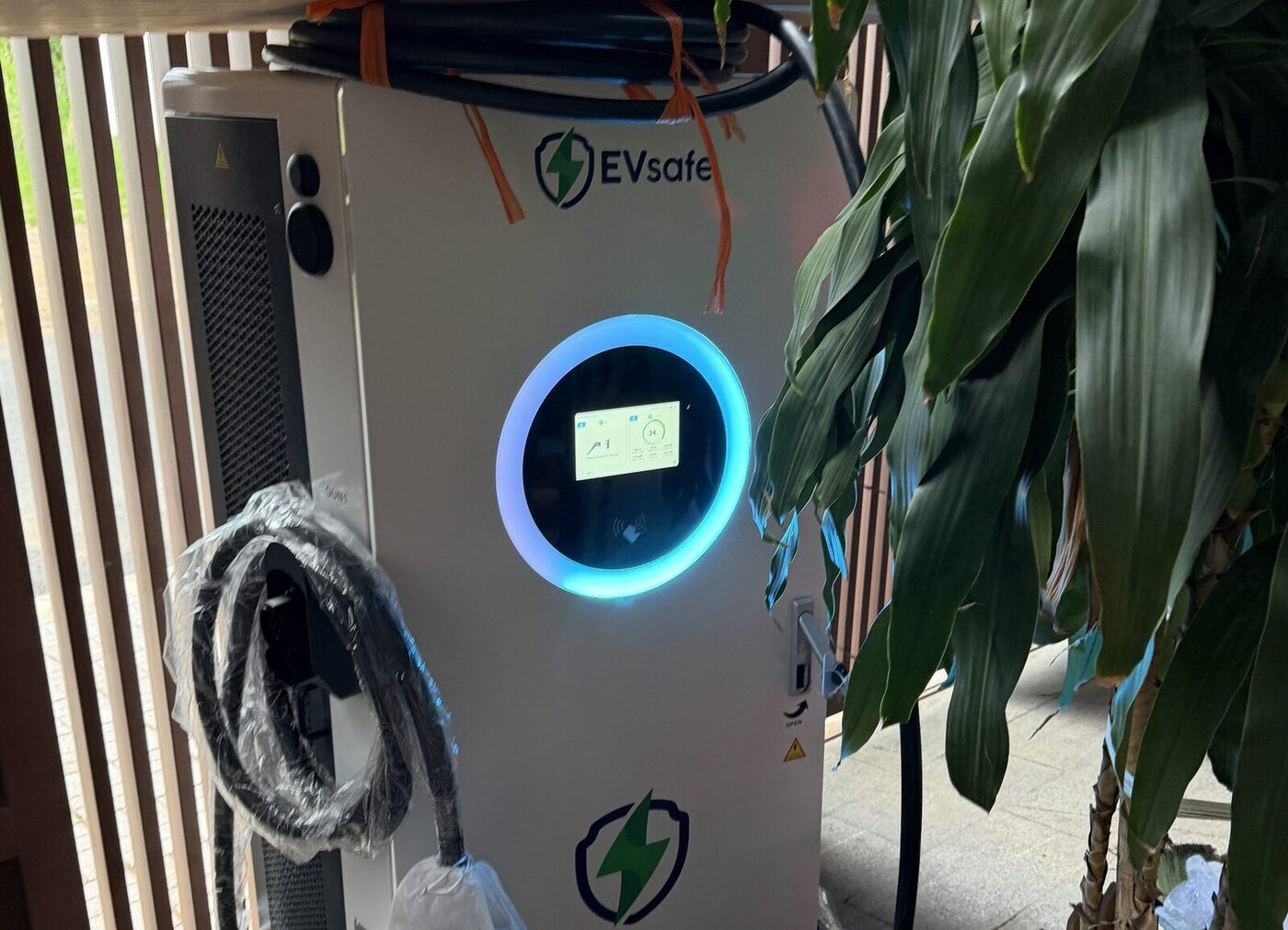
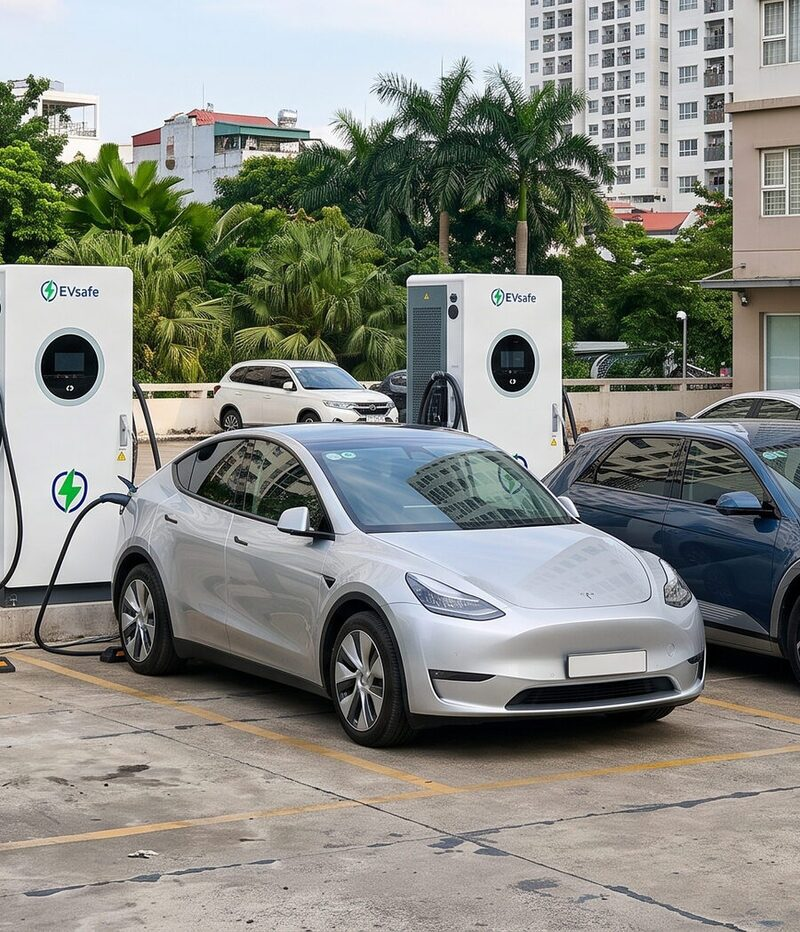
With its vision of developing an EV charging ecosystem in Vietnam, EVsafe focuses on researching and deploying smart charging station solutions dedicated to electric motorbikes. EVsafe's charging station system is designed with multiple power levels, from a stable charging mode for daily needs to fast charging solutions for situations that require optimizing travel time.
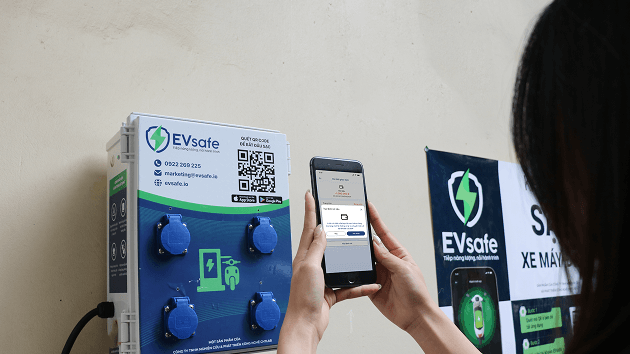
EVsafe electric motorbike charging stations are developed with smart features for a more stable and durable battery lifespan.
In particular, the system also integrates real-time charging management and monitoring features such as tracking operating status, controlling temperature, managing output power, and storing charging history. These technologies make the charging process more stable, while also helping users monitor the battery's operating condition more effectively during long-term use.
In general, charging the battery the right way not only helps extend battery lifespan but also helps the vehicle operate stably, safely, and cost-effectively over the long term. As the demand for electric motorbike charging becomes increasingly common, smart charging station systems capable of controlling temperature, stabilizing the power source, and monitoring the charging process in real time will play an important role in enhancing the daily electric vehicle experience.