Learn how OCPP and OCPI protocols help EVsafe charging station investors eliminate the risk of vendor lock-in, easily expand infrastructure, and optimize operations.
OCPP and OCPI protocols in EVsafe electric vehicle charging infrastructure
When investing in electric vehicle charging station infrastructure (EV), one of the biggest risks that investors (CPO - Charge Point Operator) face is the phenomenon of 'Vendor Lock-in' (dependence on a single hardware or software provider).When the system is closed, you are forced to use fixed management software, which is difficult to upgrade and cannot integrate charging stations from other manufacturers.
To thoroughly solve this investment risk problem, EVsafe builds a management platform based on two international open communication standards: OCPP and OCPI protocols. This open architecture not only enables smooth communication between devices but also brings long-term business value, helping investors to actively control their assets and easily scale up the charging network.
1. OCPP protocol - Standardizing the connection from Charging Station to Charging Station Management System (CPMS)
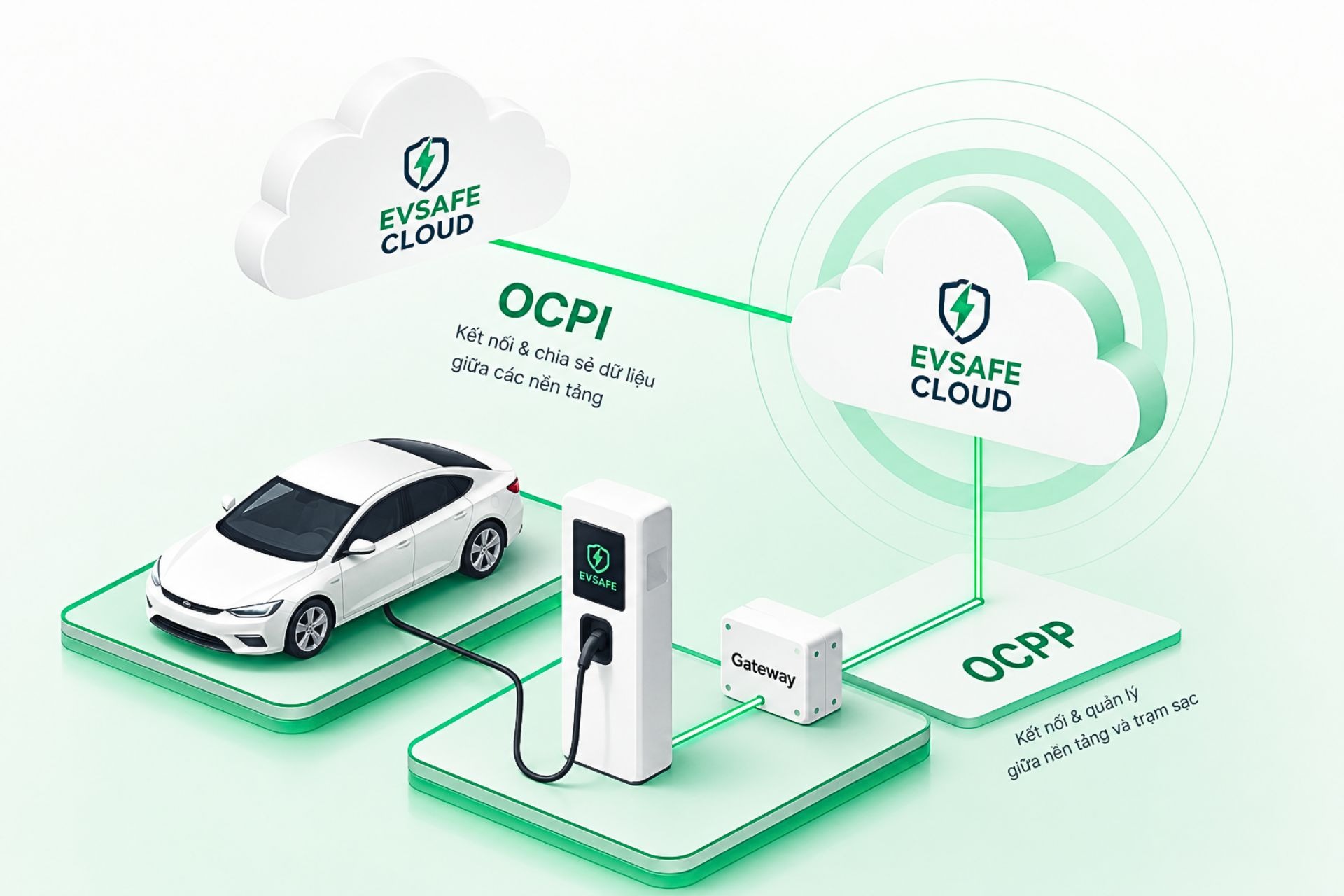
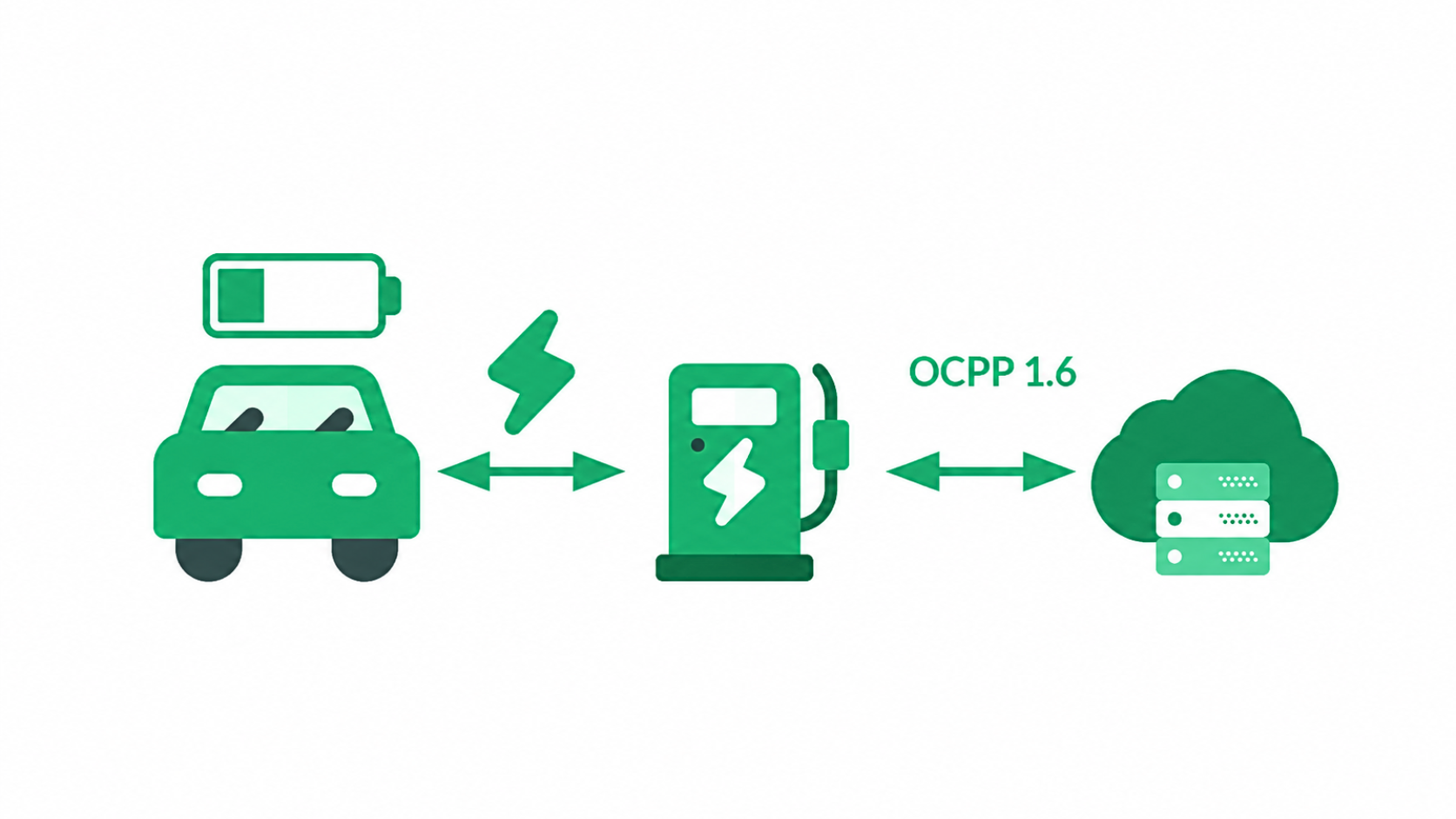
OCPP (Open Charge Point Protocol) is an international standardized communication protocol that directly connects the charging station hardware device (Charging Station) and the Central Management System (CPMS / Backend).
Instead of using closed codes from each manufacturer, EVsafe designs a system that is compatible with and flexibly supports various standard OCPP versions:
- OCPP 1.6J (JSON over WebSockets): Ensuring smooth real-time data transmission, supporting remote start/stop charging control, updating software OTA (Over-The-Air) and monitoring stable power and current.
- OCPP 2.0.1: Comprehensive upgrade of security (high-end Security Profile), in-depth device management (Device Management) and advanced transaction handling (Transaction Handling) to be ready for future smart charging features like Plug & Charge or V2G (Vehicle-to-Grid).
(Technical note: EVsafe currently provides the ability to integrate and support the above OCPP standards according to the specific deployment schedule of each investor).
2. OCPI protocol - Interconnected connection between Charging Networks (eRoaming)
Unlike OCPP which focuses on device - software connection, OCPI (Open Charge Point Interface) is a peer-to-peer communication protocol between charging station management systems (Backend-to-Backend).
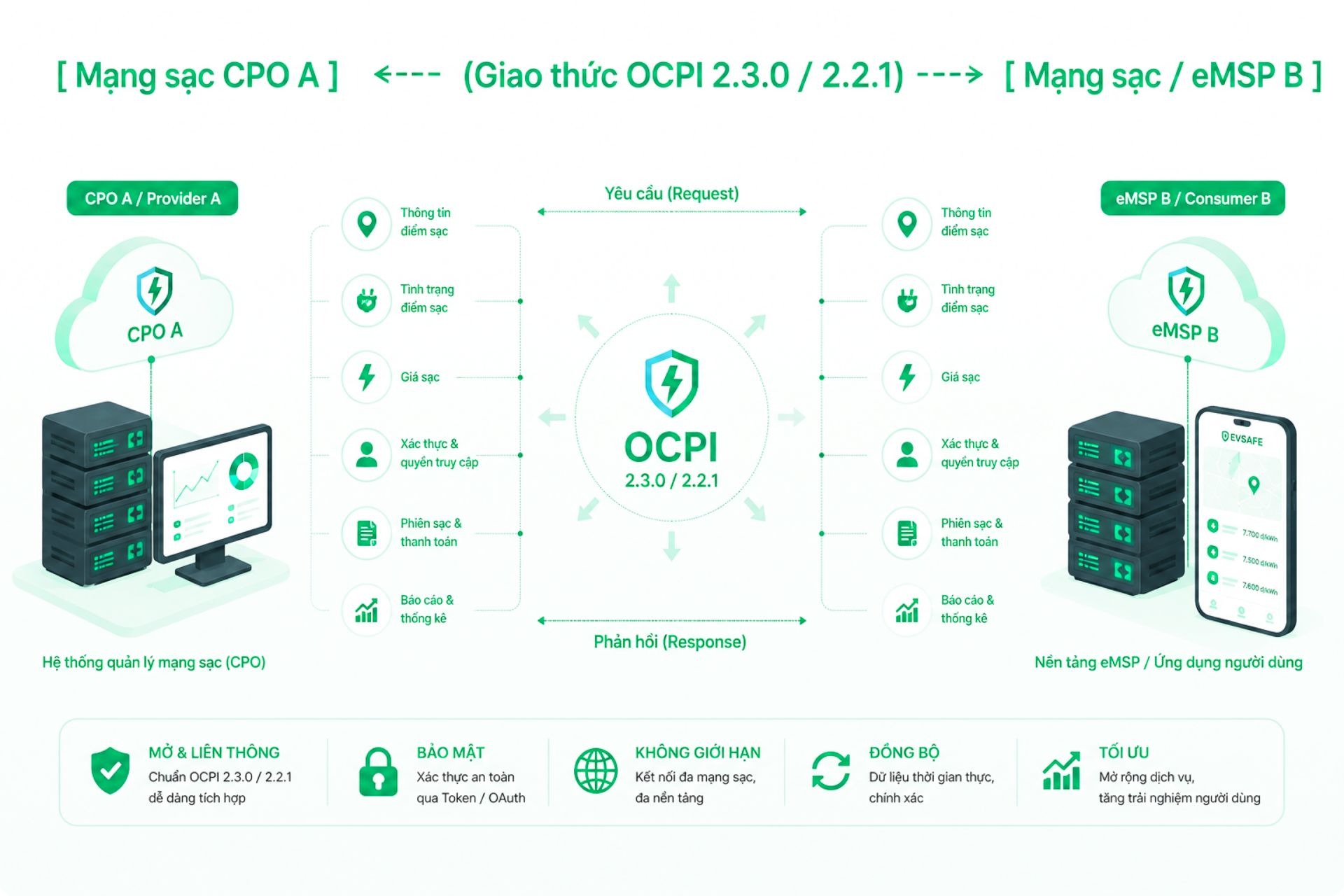
Through the support of OCPI protocol (version 2.2.1 and 2.3.0), the EVsafe platform helps charging station owners connect interlinked with electric vehicle service providers (eMSP) and other charging station operators. This protocol plays the role of:
- Exchanging session data (Session Data) in detail and accurately.
- Synchronizing tariffs (Tariffs) and charging port status in real-time.
- Providing detailed session data (CDR - Charge Detail Record) for billing, reconciliation and transparent payment between parties.
3. What value do OCPP and OCPI bring to charging station investors?
Not just pure technical parameters, choosing a platform that supports OCPP and OCPI protocols like EVsafe brings practical business benefits to B2B investors:
3.1. Minimizing the risk of dependence on a single vendor (Vendor Lock-in)
Investors are completely proactive in choosing equipment. You can buy charging station hardware from vendor A and manage it on EVsafe software, or switch to a different operating software without having to replace the entire expensive charging station.
3.2. Easy integration of diverse charging station models and platforms
Thanks to the open standard, EVsafe supports the integration of many different charging station lines (AC charging, DC fast charging) from popular brands on the market, helping to optimize initial investment costs (CapEx).
3.3. Easy expansion of the charging network according to business scale
When the scale of charging points increases from a few dozen to thousands of points, the OCPP/OCPI architecture helps the system operate flexibly, without being congested by infrastructure or requiring a complete rewrite of the software.
3.4. Supporting roaming between systems (Expanding customer files)
Helping electric vehicle drivers of partner applications (eMSP) easily find, charge and pay at your station without having to download many different applications. This directly increases the fill rate and revenue per charging station.
3.5. Standardized data synchronization, serving automatic reconciliation
All information from pricing, station status, charging history to CDRs data is transparently standardized. Thanks to this, the financial reconciliation and cash flow process between station owners, operating partners and end-users takes place automatically and accurately.
4. Comparing the differences between OCPP and OCPI protocols
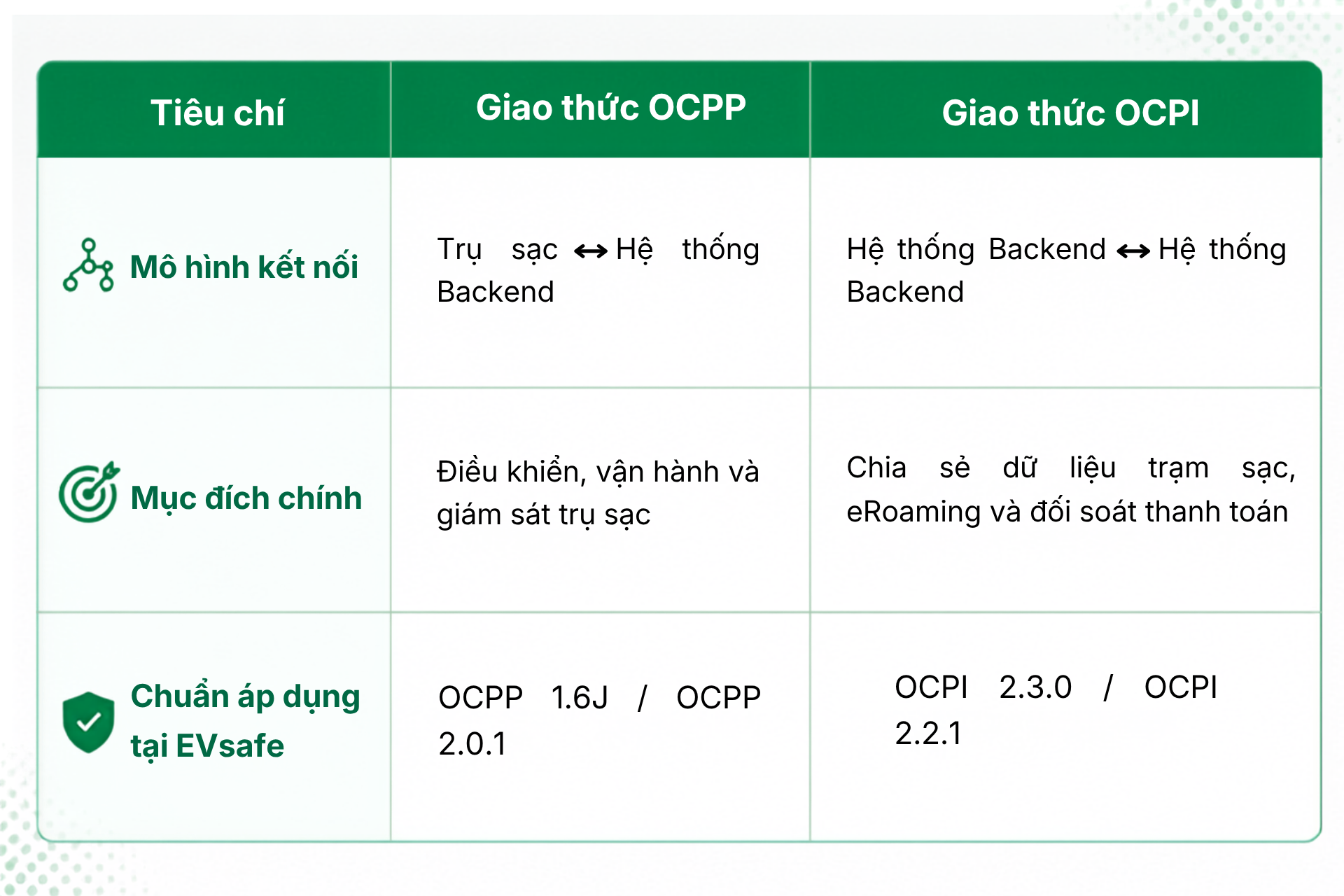
Choosing a charging infrastructure solution that standardizes OCPP and OCPI protocols from the start is a strategic move that helps businesses optimize investment costs, ensure hardware flexibility, and be ready for the explosion of the electric vehicle market. EVsafe provides an open-platform solution, accompanying investors in building an efficient and sustainable charging station network.
Is your unit deploying a charging station network and needs to assess OCPP/OCPI compatibility? Contact EVsafe today to receive in-depth technical architecture consulting and proposals for the most optimal integration method for your project!